
Aleksandar Randjelovic
Pawn chains and direction

About 30 years ago, when I was at the beginning of my chess career, I was crazy about opening ideas. I loved exploring strange systems and weird-looking positions, trying to understand what was actually going on.
Back then, I would usually spend time going through one of those - deaf and mute - Encyclopedias of Chess Openings (by Chess Informant). That was pretty much my only source for learning openings. Pretty much the definition of how openings shouldn’t be studied!
I stumbled upon the Old Benoni (I didn’t even know there was a difference between the Old Benoni and the Czech Benoni). What caught my attention wasn’t only the unusual name - it was the type of positions it created. The center would get completely locked.
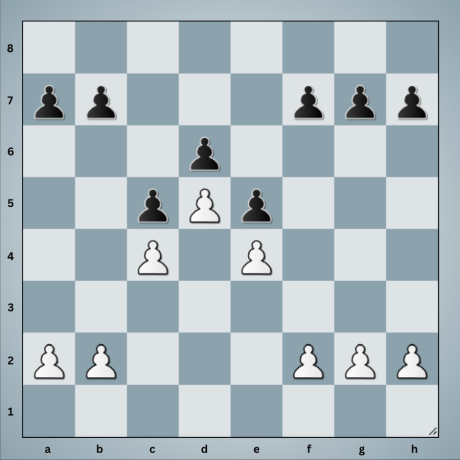
And I loved that.
I felt safe. Like no immediate danger was around. It felt less about being quicker than the opponent and more about preparing your forces, maneuvering, improving your pieces... Almost like both sides were sitting in their own trenches, each preparing their own strategy - free from direct fire.
But what really struck me was this: once the center became blocked, White should play g3!
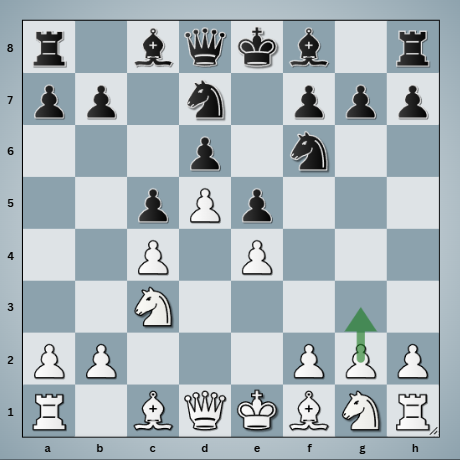
And I just couldn’t understand it - why should the bishop develop like that? There were two of our pawns sitting on light squares, and in front of them - two of Black’s pawns. That bishop looked buried alive.
I wondered about this for years. My coach wasn’t particularly interested in discussing openings. He thought there were more important things to study, so I was mostly left figuring things out on my own.
Overall, instead of following the silent advice of the ECO, I trusted my own understanding of positional chess. In similar positions I would play Bd3 instead, reroute to c2 and a4, trying to exchange it for something in the opponent's camp.
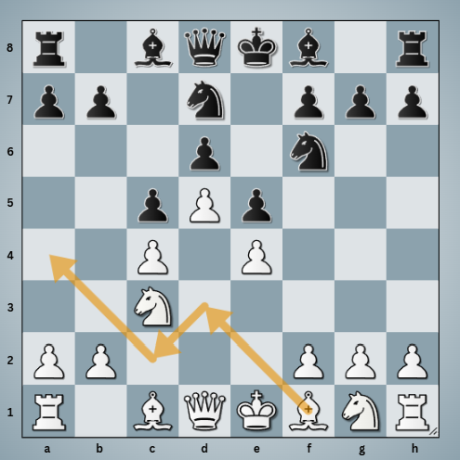
Occasionally it would land on e2, and I'd be looking to trade it via g4 whenever the opportunity appeared. It made perfect sense to me. Until I realized I was actually breaking an important strategic principle.
Because even if that bishop is technically the bad bishop, in closed positions we don't spend time trying to get rid of it. It actually helps the player with less space - our opponent.
Closed positions are often misunderstood like this, at least at first. And one of the biggest mistakes beginners, intermediates, and even club players make is trying to play them using ideas that belong to open positions.
In open centers, activity and speed often matters the most. In closed positions, space suddenly starts playing a much bigger role.
So the key question becomes: Who has more space, and where?
Pawn chains usually give us the answer. When visualizing the position, it helps to remove all the pieces from the board, and only look at the pawns.
In many closed structures, the direction of the pawn chain tells us where we should attack, and where our opponent will likely play.
In the French structure, for example, things are relatively straightforward. White gets more room on the kingside and expands there. Black feels more comfortable on the queenside.
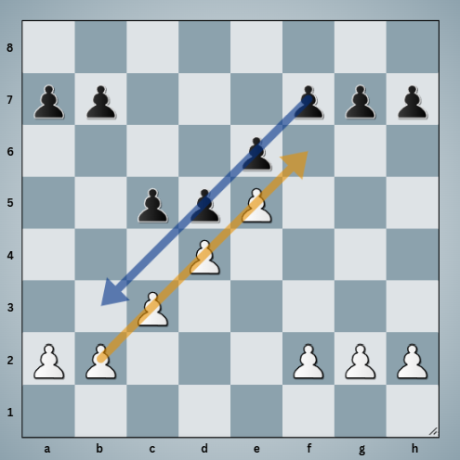
But the Old (or Czech) Benoni confused me for years. Because here we suddenly get something strange: Pawn chains pointing in both directions. White has one chain from c4 to d5, and another from e4 to d5. Black has d6–e5, but also d6–c5.
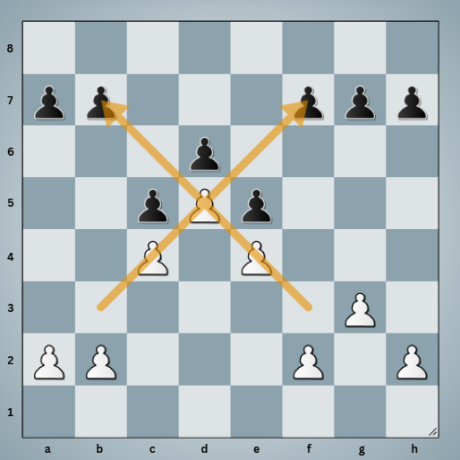
So suddenly, the usual guideline becomes useless. If pawn chains point toward both flanks... Where should we actually attack? Feel free to leave your thoughts in the comments.
By the way, recently I recorded a lesson trying to unpack this confusing type of structure and explain what should actually guide our plans when the pawn chains seem to point both ways. If you're curious, here’s the lesson:
You may also like
 IM datajunkie
You’re studying chess openings the wrong way (do this instead)
If memorising opening lines made you stronger, many club players would be masters. CM HGabor
How titled players lie to you
This post is a word of warning for the average club player. As the chess world is becoming increasin… IM datajunkie
How to think like a master in quiet positions
The 3CE method FM mizant83
What Beginners Get Wrong About Learning Chess
This post may be interesting primarily to complete beginners, or to those who are just starting thei… FM mizant83
Which Openings Actually Make Sense for Beginners?
Before asking whether an opening is good for beginners, we should ask: What is a chess beginner in t… thibault