
Vadim Bogulov on Unsplash
Why you overthink in chess (and how to stop)
It took me 25 years to realise thisWhat if I told you that most overthinking in chess has nothing to do with knowledge or calculation, and everything to do with fear?
It took me 25 years to realise that the reason I think too much is because I don’t trust myself. I wasn’t burning time because I was trying too hard to find the best move. I was burning time because I was afraid.
You know the feeling: a variation you’ve triple-checked, your hand hovers, you’re checking one last time and another ten minutes disappear.
In this post I’ll talk about the three fears that cause most overthinking in chess, how they show up in games and what you can change to fix each one.
By the end, you’ll know which fear is driving your overthinking and what to do about it starting today.
Let’s get into it.
The first cause of overthinking is perfectionism.
Perfectionism sounds like a good thing. It sounds like you’re taking the game seriously and being responsible. In reality, it looks like refusing to move until you feel completely certain.
The problem is that in chess, certainty doesn’t exist in most positions. If you wait for perfect clarity, you’ll be waiting forever.
Here’s an example from a game I played.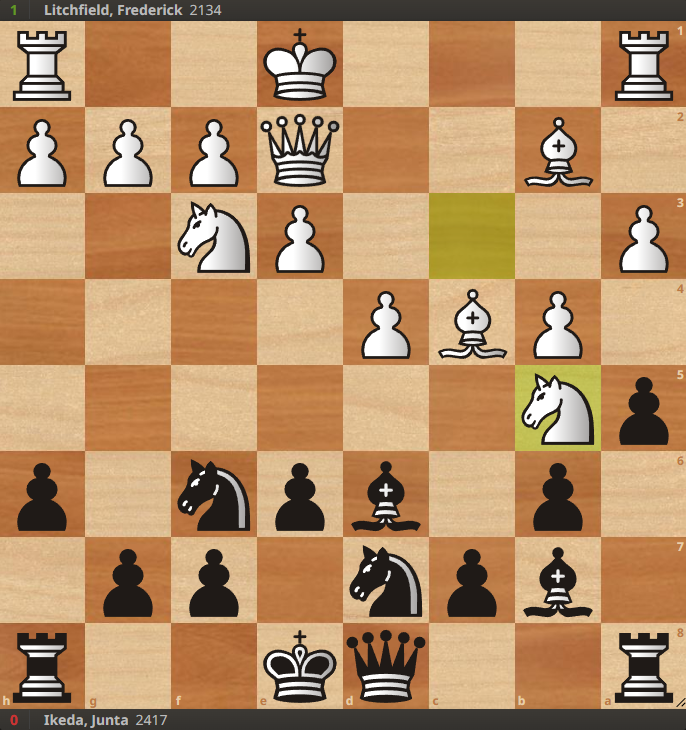 After my opponent played 11.Nb5, I was immediately attracted to this variation: 11...axb4 and White has to play 12.Nxd6+ cxd6 13.axb4. After this, I liked 13...Rxa1+ 14.Bxa1 and then 14...Qa8.
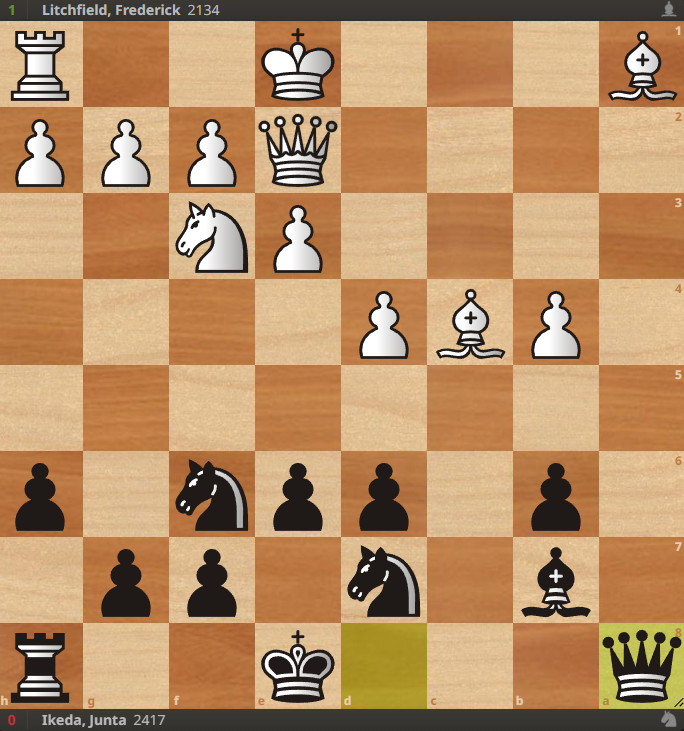 After 15.O-O, I have two options. I can play 15...Bxf3 16.Qxf3 Qxf3 and go into an endgame with two knights and a better structure versus two bishops. Or instead, I can just castle.
A confident player would’ve played these first few moves quickly and then thought about which way to go.
Instead, I started second-guessing myself and went deeper and deeper. I started worrying about whether I could win the endgame that might happen ten moves later. That was completely unrealistic at move 11.
In a 90-minute game, I spent more than 20 minutes here. In the end, I avoided the decision altogether and played a ‘safe’ move instead, 11...Be7. I was already low on time by the early middlegame, got into time trouble and lost a bad game.
What I learned from this is simple. When you try to be perfect in chess, your trust in yourself shrinks. You stop playing moves you’re curious about. You avoid responsibility.
You play safe moves because they protect you emotionally, not because they’re the best. But doing that creates more doubt. In the next game, you overthink even more.
So how do you deal with perfectionism?
First, if there’s a move you genuinely want to play and it looks reasonable, play it. As long as you’ve thought about it and it makes sense, that’s how intuition gets trained. Playing the move is how you learn whether your instincts are pointing in the right direction.
Second, if the position isn’t critical and there’s no forcing line, set a time limit and decide. Save your time for moments that actually decide the game. Most positions aren’t that important, even if they feel important in the moment.
The second cause of overthinking is the fear of making mistakes.
Thousands of years ago, hearing a sound in the forest meant danger. Your brain learned to hesitate, wondering if a bear is going to eat you. Now you’re sitting at a chessboard, thinking about playing a move in a tense position and your body reacts the same way.
Many players think they overthink because they want to find the best move. In reality, they overthink because they’re scared of choosing something that might be wrong. They’re worried about how they’ll look if they make a mistake. Looking good becomes more important than learning.
Here’s another example from a game I played, the day after the game from earlier.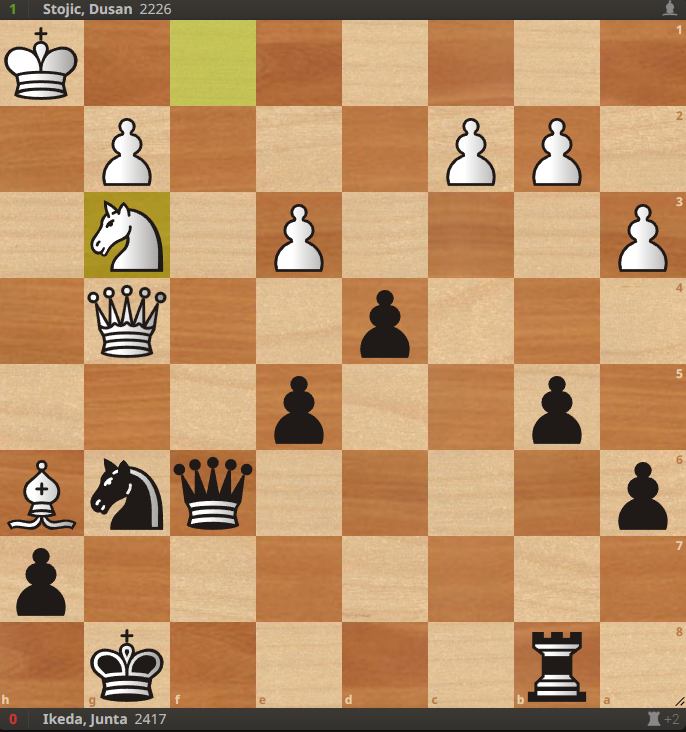 I was an exchange up, and the simplest thing in the world was to exchange queens with 36...Qh4+. Extra material, queens off, convert the endgame. But with the seconds ticking down, I started seeing ghosts. After 37.Qxh4 Nxh4 I saw 38.Bg5 Ng6 39.exd4 exd4 40.Nf5.
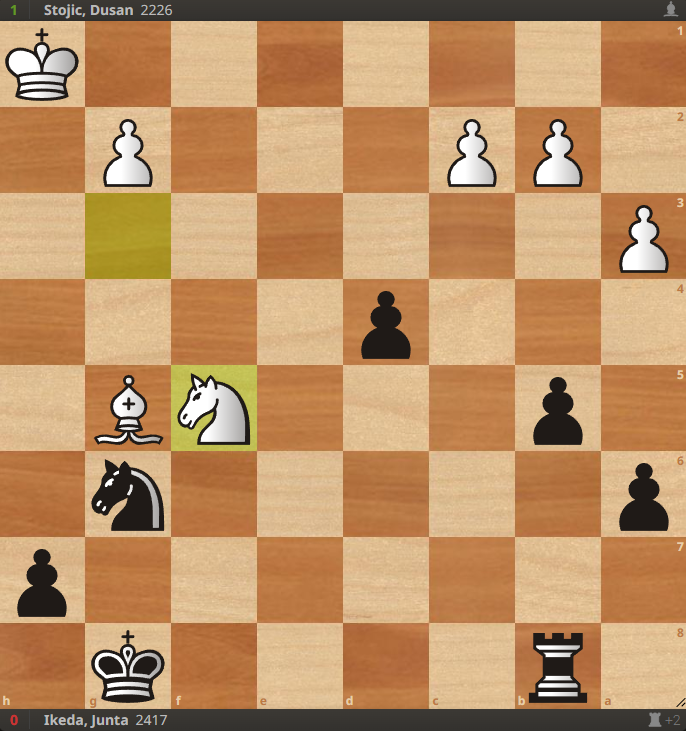 I realised I wouldn’t be able to defend the d-pawn and panicked.
So instead of exchanging queens I played 36...dxe3. When your time is low, fear chooses for you. And after 37.Bg5, I couldn’t simplify anymore.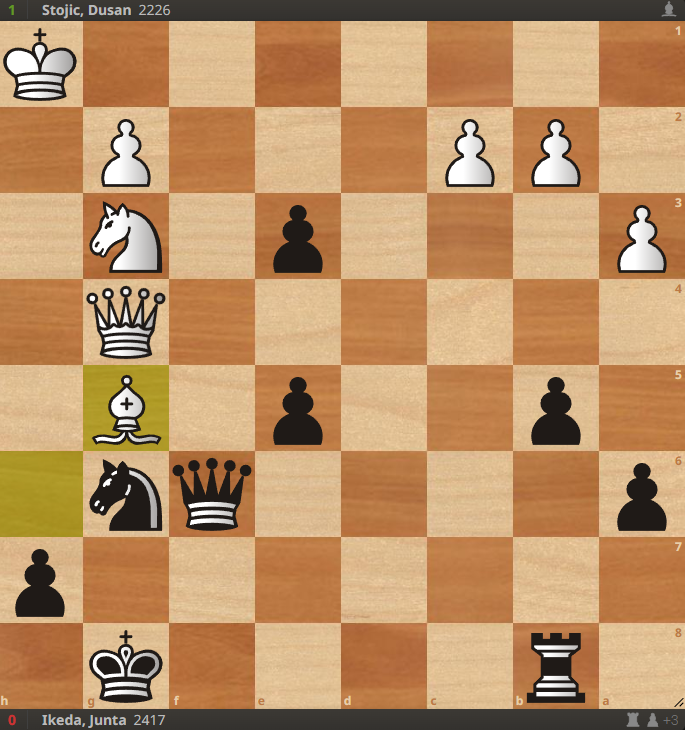 After 37...Qc6 38.Nf5 I ended up losing on time.
In reality, exchanging queens with 36...Qh4+ was still winning. And practically, it would have been much easier to play with queens off with low time. But part of me wanted to avoid looking dumb from missing something.
This is something many players don’t like admitting. Losing because of time trouble often feels safer than making a clear mistake. Saying “I was winning...but I got low on time and blundered” protects your ego.
The fear of making mistakes becomes crippling when it leads to chronic overthinking.
So how do you deal with this fear?
First, look at your recent serious games. Highlight the mistakes you and your opponents made, especially with opponents around your level. If you excuse their mistakes but feel disgusted by your own, your ego is getting in the way.
Second, when you analyse a mistake, don’t just look at the move. Ask why it happened. Then ask why again. Keep going, and eventually you’ll find an answer you don’t like. That’s usually the real one.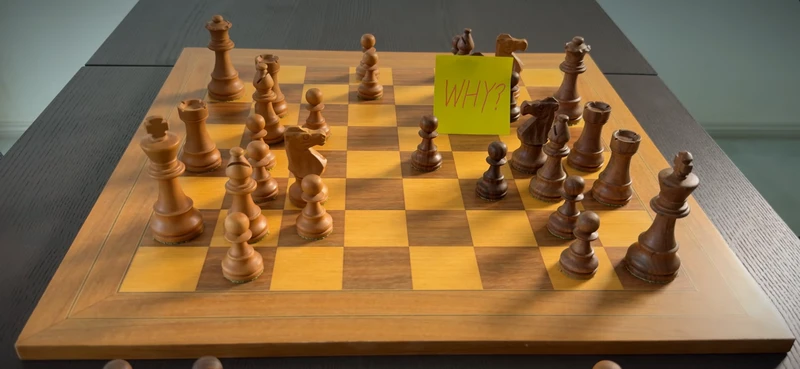
The third cause of overthinking is the fear of losing.
This is the deepest fear in chess.
You might have a good position against a higher-rated player, but you accept a draw because it feels safer. You win material and relax too early, then panic when the opponent counterattacks. Or you face a 50-50 decision, your gut tells you to play the brave move but you choose the passive option instead.
I’ve done all of these multiple times. And the reason you remember how you felt even 10 years later is because they make you feel small.
When you lack confidence, losing a game feels like failing as a person. So you chase rating, recognition, easy wins and having control. You avoid risk, difficulty and uncertainty.
Many players spend years obsessed with results. They feel intense pain after losses, push harder to improve and repeat the cycle. I’m not saying that’s wrong. But for me, after many years I felt burned out by that cycle of obsessing over results and improvement.
‘Improvement’ sounds like a healthy goal, but that can also become a trap if your self-worth depends on visible progress. When you see your rating has been stuck, the fear comes back.
What finally helped me was changing the base of my confidence.
Results are unstable. You can’t fully control them.
Instead, learning is something you can control.
Because when you think about it, improvement is
- learning how to get better at things you know,
- learning how to do new things and
- doing less of what you’ve learnt doesn’t work.
So learning leads to improvement. Improvement leads to playing games you can learn even more from. But when you focus on results first, or even improvement you break the flow.
When learning becomes the standard, every game has value. Wins and losses stop defining you. You can still compete, train hard and aim high. But a bad result doesn’t mean you aren’t good enough any more.
And confidence doesn’t come from rating. It comes from keeping promises to yourself.
When you don’t keep promises to yourself, you start performing for other people, not yourself. That creates anxiety, and anxiety creates overthinking.
Here’s one practical place to start. Write down one part of your chess you know you should work on, but have been avoiding. Set a timer for 30 minutes and work only on that. Do that today. Then before you go to bed, write your main task for tomorrow.
Confidence grows from action, not from thinking.
That’s what took me 25 years to learn about overthinking, fear, learning and confidence in chess.
To defend oneself against a fear is simply to insure that one will, one day, be conquered by it; fears must be faced.
—James Baldwin, The Fire Next Time
You may also like
 GM Avetik_ChessMood
10 Things to Give Up to Enjoy Chess Fully
Discover how embracing a lighter mindset can help you enjoy chess again and achieve better results. IM datajunkie
Why most chess players never learn from their games
What a fighter pilot coaching a Norwegian soccer team can teach you IM datajunkie
The Upstream Problem
How studying endgames changed my middlegame without me trying CM HGabor
How titled players lie to you
This post is a word of warning for the average club player. As the chess world is becoming increasin… ChessMonitor_Stats
Where do Grandmasters play Chess? - Lichess vs. Chess.com
This is the first large-scale analysis of Grandmaster activity across Chess.com and Lichess from 200… thibault