
Photo by DON JACKSON-WYATT on Unsplash
Why most chess players never learn from their games
What a fighter pilot coaching a Norwegian soccer team can teach youIf you follow European soccer, you probably heard of Bodø/Glimt this season. A Norwegian club from a small fishing town above the Arctic Circle, they beat giants like Manchester City, Inter Milan and Atlético Madrid. In chess terms, it’s like an unknown IM beating three 2700+ super-GMs in a row. Photo of Bodø by Metin Celep on Unsplash
Since that didn’t sound like luck, I looked online for the reasons behind their success (AP News: 1, 2) and ended up thinking: this applies to chess too. The core reasons behind their run turned out to relate to parts of my own chess philosophy: your in-game focus, how you handle mistakes and what you train.
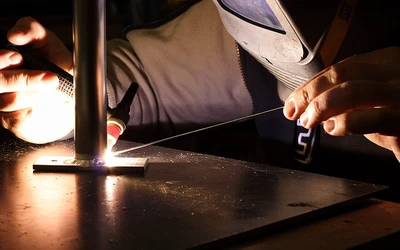
An unusual hire was at the heart of the club’s turnaround. A former fighter pilot named Bjørn Mannsverk has been their mental coach since 2017, joining just after the club had been relegated. Their rise in the last 9 years have been pretty extraordinary. Photo by DON JACKSON-WYATT on Unsplash
In 2017, the players were already good. But under pressure, they kept losing confidence, making mistakes and collapsing.
Let’s see if the philosophy and habits that helped Bodø/Glimt can help with your chess.
Winning or losing don’t matter
Under the new mental coach, results became secondary. The team focuses on whether they executed what they trained: how they prepare, play and keep improving.
Think of it this way: if you go into a game of chess with only winning in mind, you’re more likely to judge the game as a good or bad thing depending on the result. You learn less because the game is only a means to an end. And you can reinforce bad habits with a sloppy win or not learn the right lessons from a loss that would help you.
That’s why I recommend having a process goal for every tournament or serious game you play. Something you can focus on so you don’t obsess over the result, and you can judge how you played based on that. It should be something you want to get better at, and can keep directing your attention to where you want it: for example, if you struggle with time management, having 10 minutes left after move 40 in a 90+30 game.
By having an in-game focus, with each game you’re actively working on a part of your chess you want to improve. Whatever the result of the game, you’ve made progress on a key area, and by having a process-based focus that guides your thinking, you won’t feel the pressure of having to win as much.
Learning from your own games and mistakes
When I was younger I played a lot of tournament games but barely analysed any of them. Part of it was not really knowing how, but mostly I told myself it would be too much work, so I avoided it. What I actually needed to do was this: look for recurring weaknesses and patterns, find one thing to take into training, repeat.
Instead I used results as my feedback loop. Good tournament, I was a good player. Bad tournament, why am I so bad? Rating went up, improving. Rating dropped, going backwards. It’s an unhealthy approach, because confidence built on results is too fragile, and rating is only a lagging indicator of what you’re learning and how you’re performing against others in particular games, not something that defines you.
What Mannsverk brought from aviation is the idea that mistakes need to be acknowledged quickly and specifically so they don’t repeat or lead to other mistakes.
At Bodø/Glimt, they call it “the Ring”. When they concede, the players briefly get together in a huddle, talk about what happened without blame or drama, move on. The chess equivalent would be reviewing your games with that same matter-of-factness.
Here’s what I missed; Here’s the pattern; I’ll work on X to get better at it.
Train what you need in your games
When you’re young, there’s this sense that there’s unlimited time to improve, so you relax. I didn’t analyse my games seriously because some part of me assumed I’d eventually just improve all areas, including weaknesses. I didn’t make training with intensity a habit because future me would do it. The fixation with rating was partly a substitute: if the number goes up, that counts as improvement, even if you’re not learning anything new or not actually addressing the main issues in your chess.
At some point, you realise the time available to improve or to work on chess is finite and years are already gone. For some people, they can never get past their old ways. For others, it motivates them to change. You go from “am I good enough?” to “am I spending time on the things that actually help me grow?”
Mannsverk’s other principle from the Air Force: train the way you intend to perform. Pilots rehearse under pressure, because there’s no space for error in a mission. Chess players often do the opposite: puzzles on autopilot, blitz while distracted, memorising opening lines rather than understanding them. Then we expect our brains to perform at 100% in a 90+30 game. If you want to be at your best for four hours, you have to train those skills at home: focusing, going deep on positions and challenging yourself.
And when you train hard, you know you’ve done all you can - at the board you can focus on giving your 100% without that nagging feeling, I should have done more.
Habits that help you improve
Bodø/Glimt built habits: meditation, sharing their honest thoughts with teammates and coaches, reviewing mistakes, focusing on process over results. Those became the fuel that helped them become better players who are also more resilient and confident.
Of course, you need to keep working on the actual in-game skills and build your understanding too, not just improve your mindset and think the job’s done. But it’s easier to figure out and do the right study and training when you’ve done that part.
As far as you can, get into the habit of asking yourself in relation to any action taken by another: ‘What is his point of reference here?’ But begin with yourself: examine yourself first.
—Marcus Aurelius, Meditations
If you enjoy posts like these, I write a free weekly newsletter with practical tips on chess improvement and building healthier chess habits. If you want to join over 2,000 other chessplayers, you can subscribe here.
You may also like
 thibault
How I started building Lichess
I get this question sometimes. How did you decide to make a chess server? The truth is, I didn't. IM datajunkie
You’re studying chess openings the wrong way (do this instead)
If memorising opening lines made you stronger, many club players would be masters. IM datajunkie
Why your tactics aren’t improving
The 4 fixes that can help you become a tactician IM datajunkie
Why you overthink in chess (and how to stop)
It took me 25 years to realise this CM HGabor
How titled players lie to you
This post is a word of warning for the average club player. As the chess world is becoming increasin… IM datajunkie