
How to reach 1800, part 1
I discuss the most typical mistakes 1600-rated players make
We all want to get better at chess, but the path to get there is different depending on our level. I'm starting a series on helping people go from approximately 1600 to 1800, and I'm doing so by analyzing game submissions (feel free to post your own), and then highlighting the key mistakes. I'm particularly paying attention to mistakes I see over and over, especially if they can be described in words. After all, if you can put your learnings into words, it'll be a lot easier to remember them! If you are the kind of person who prefers a video lesson, you can watch this video on my channel.
Without further ado, let's get going! Here's the game we'll discuss.
For the sake of learning, I organized mistakes into 5 main areas. Let's go one by one!
Error #1: Suboptimal Opening Choice
One common misconception I've seen over and over is that, unless your rating is 2000+, you can't play "main lines" and instead, need to settle for offbeat lines. The truth is that offbeat lines are uncommon precisely because they aren't that good. In my opinion, if you are under 1800 and don't want to memorize theory, you are better off playing 4-5 moves from a "main opening" than 4-5 moves from a rare and suboptimal line.
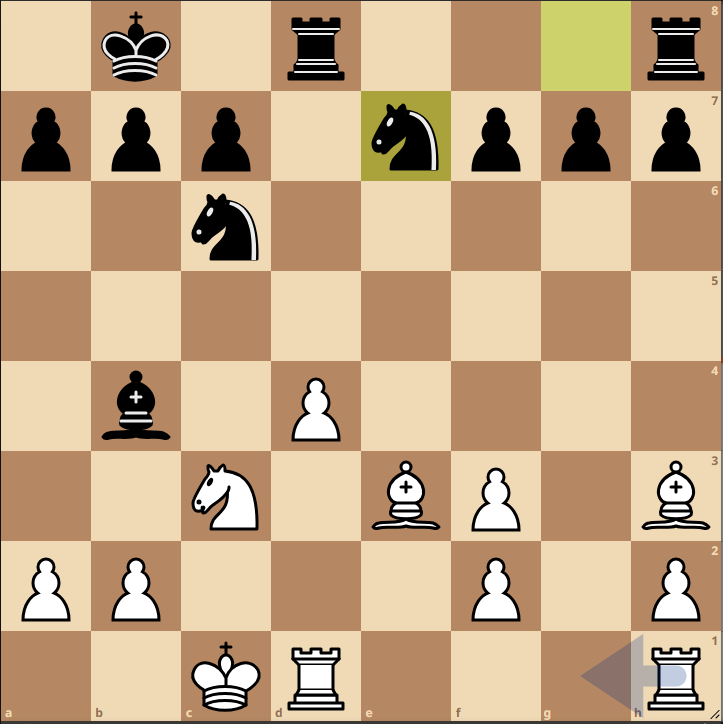
In this game, the problem came with the opening choice (the Danish Gambit). The opponent responded well with the practical 3...d5, and after just 10 moves, I feel White has zero opening advantage, and have long-term issues because of their doubled pawns:
Error #2: Pursuing an Impossible Target/Goal
Another common error I see from players in this rating range is that they attack "weaknesses" that aren't weak enough. Doing this tends to be a waste of time. If you are in this rating range, you can avoid these mistakes by focusing less on "immediate threats". That means, if the position doesn't have a viable immediate threat (most positions don't), then you should focus on making "general improvements", such as centralizing your king, or making slight improvements in coordination.
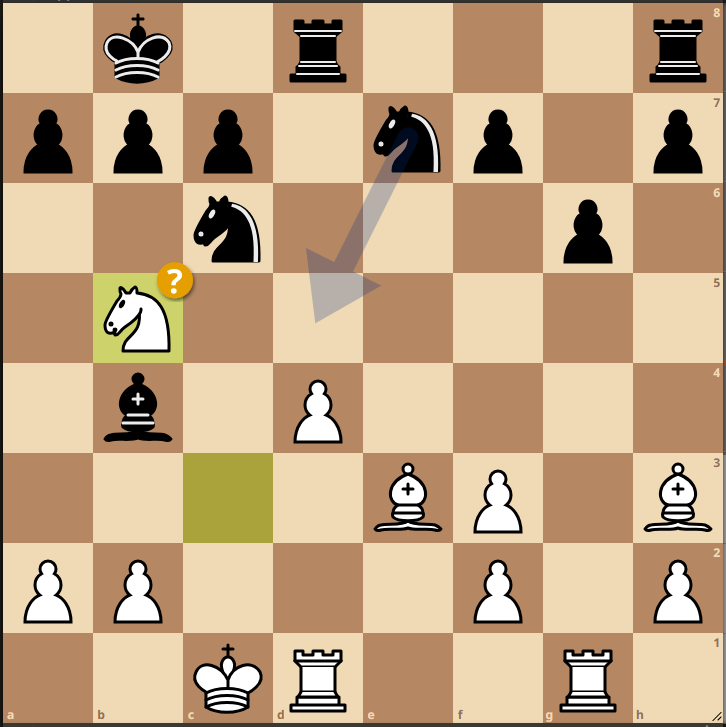
In the game, White played 14.Nb5? with the goal of adding pressure against the pawns on a7 and c7. Now clearly, the issue is that neither pawn can realistically be captured. Any such threats would be easy to neutralize, and in fact, Black just played 14...a6 and White had nothing better than retreating.
Error #3: Weakening by Advancing Pawns
Every pawn push leaves 1-2 squares unprotected. This is a principle every player must remember before advancing their pawns. In fact, it's a mistake that decides games even among much higher rated players. Every time you advance a pawn you get a bit of space, and gain control of new squares in exchange for the squares you lose control of. Your task is to learn to appreciate whether the squares you gain are worth more than the ones you give up.
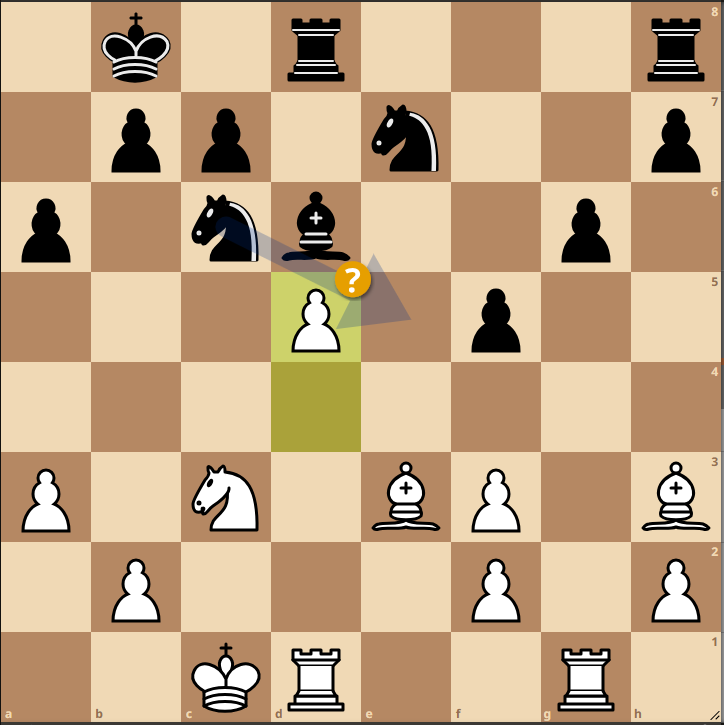
In this particular game, White pushed 17.d5? which left the e5-square unprotected. That was a weakening move because the opponent could respond with ...Ne5 immediately taking advantage of the square, and the knight on e5 created an unpleasant pressure against the f3-pawn right away.
Error #4: Attacking When You Should Be Defending
One major difference between 1600 players and 2000 players (even GM level players) is how well they handle bad positions. Even a +2 or -2 position can be turned around (without anyone blundering) just by gradually outplaying the opponent. When you are in a bad position, that means anticipating threats and avoiding the creation of new vulnerabilities. But even more important than that, you MUST first understand you're worse! Unfortunately, it's not uncommon for players of various levels to evaluate a position incorrectly (specifically, to think they should be pushing for a win when they should be hoping for a draw). In my experience, going for an attack when you should be defending is actually one of the quickest ways to lose. That's because attacks create threats but leave you exposed. If your threats aren't good to begin with, you're bound to be punished.
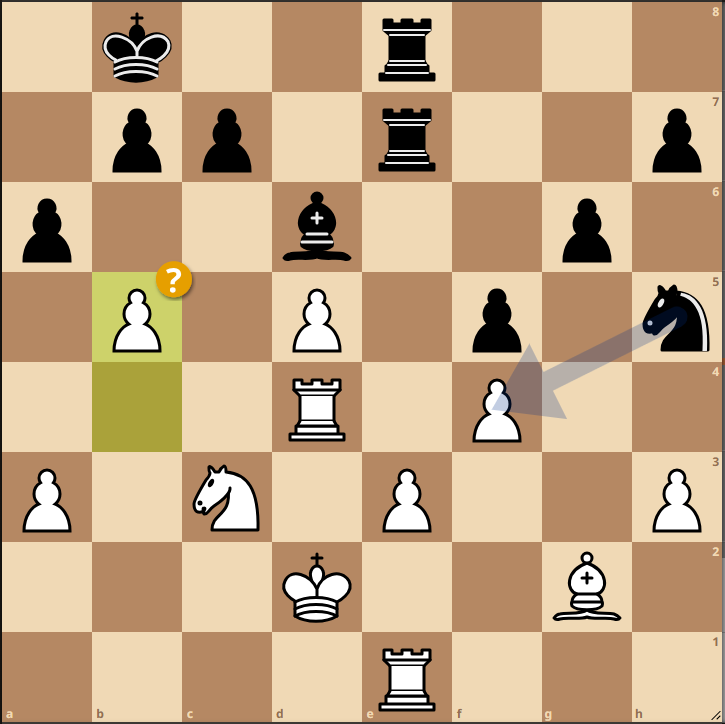
In this particular game, White played 26.b5? trying to create a queenside initiative (an unrealistic objective), but gives Black time to gain material on the kingside after a capture on f4 (taking advantage of the pin along the e-file).
Error #5: Miscalculation
I don't have a rule of thumb to give you here, but perhaps I can give you a catch phrase that GM Leitao told me once after our game. I was 15 at the time and wasn't used to playing ~2600 FIDE players like him; I played a good game for about 3 hours, and then he beat me tactically in the last 10 minutes. Then he said: "Every game is eventually decided tactically". My point here is that one very reliable way to get better if you're in this rating range (and honestly, up to 2200+) is just improving your board vision and calculation.
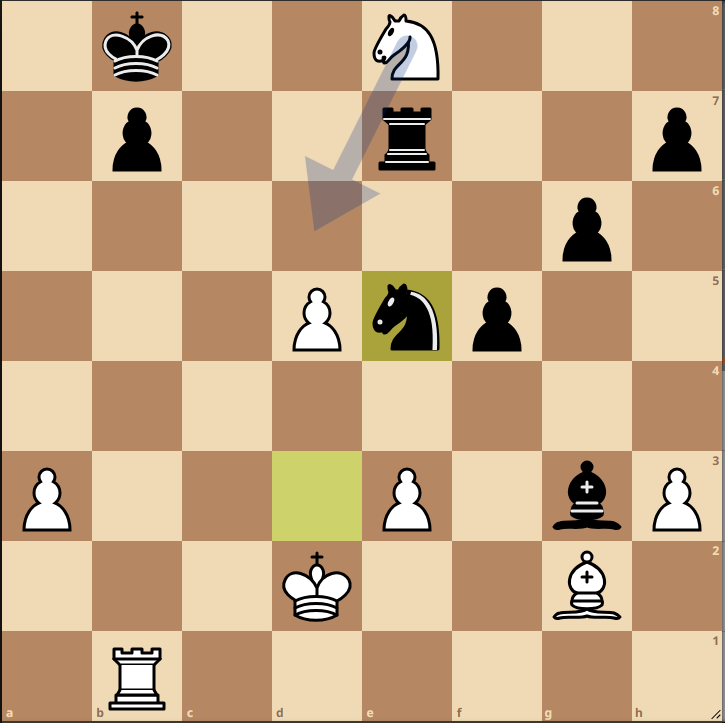
In the game, White missed the simple Nd6 which would have allowed the knight to escape safely, with a nearly equal game (after having been worse for 20+ moves).
Final Remarks
The mistakes in this game are not an isolated event. They are part of a pattern, and most players in this rating range get in trouble for similar reasons. I hope you found this content helpful, and don't forget to follow this blog, as I will publish similar articles for various rating ranges in the future ;)
See you around!
You may also like
 GM ChessMindAI
How to Evaluate Positions, Part #1
Learn how GMs evaluate positions quickly and accurately GM ChessMindAI
How to Evaluate Positions Part 2: King's Indian Defense
Learn how a typical King's Indian structure can become a nearly won position in the ending CkickyCheck
There Are No Good Anti-Scandinavians
You must accept the Scandi! GM ChessMindAI
How to Reach 1800, Part 2
I discuss the most typical mistakes 1600-rated players make (part 2!) thibault
How I started building Lichess
I get this question sometimes. How did you decide to make a chess server? The truth is, I didn't. TotalNoob69