
French Defense: The "Dullest" of All Openings

"I have never in my life played the French Defence, which is the dullest of all openings" ~Wilhelm Steinitz
Humble Origins
273 years after Ruy Lopez published his book on the Spanish Opening in 1561, a French player named Jacques Chamouillet was convincing his teammates to try something new. Perhaps he was scared of the Fried Liver Bishop on c4, or perhaps he was enchanted by closed pawn structures. In either case, we have Jacques to thank for the French Defence (thank goodness it wasn't named after him, with that riddle of a last name...). It had been tried before in amateur games, just as an experiment. At first, white had no idea how to fight against this "Lapsus Manus", this slip of the hand opening as some called it. Here's a failed Advance French between the city of Amsterdam and the city of Antwerp, in a correspondence game from 1827. Perhaps that was the inspiration Jacques needed:
The reasonable looking 5.f4 was shown to be too slow, and players started to realize that perhaps this 'hand slip' came with quite a bite. It's also interesting that the French troublemaker bishop played a vital role in the win. The black knight came to f5, and got kicked out with g4, starting a long trend leading to this day.
It became clear that you couldn't just sweep black off the board with 3.e5, which perhaps explains why the namesake game for the French Defence was a French Exchange:
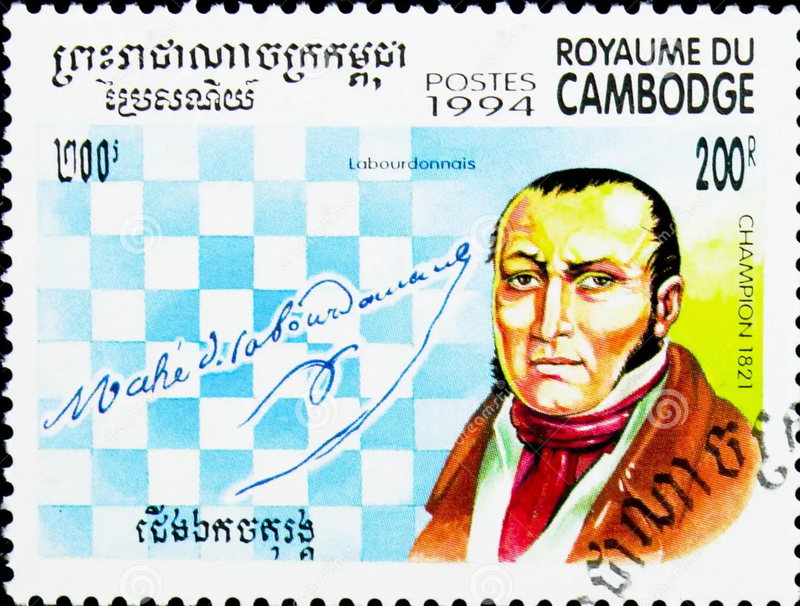
The idea of giving up the c5 pawn is thematic to the French, and a bishop on d3 is often met with c5, despite the isolated d-pawn. Notice that black was playing for the initiative, not bothering with equality. This showed that the French Exchange doesn't fully liquidate the game, especially if white plays it badly. Later that year, the French started showing in serious individual over-the-board matches, especially in the capable hands of La Bourdonnais:
As Morphy points out several times, slow play with an over-extended center tends to get punished badly in the French. The knight sacrifice on e5 became one of many tools in the French toolbox to destroy that pesky pawn chain. Black should definitely have been more accurate in the attack, as after 18...e5! white is almost paralyzed. Yet the spirit of Louis's play was fundamentally correct, as he played the French Defence like the French attack, not letting white consolidate the center. Many decades later, many such lines with running kings sprang up for white. For example, the triangle system in the Closed Tarrasch, where the white king runs to f2, sometimes g2, and sometimes h3! Yet black was always able to find ways to create counterplay:
...g5 became one of the main undermining ideas in the French, whenever the white pawn on f4 became too fragile.
The French Renaissance
As time passed, new players brought new ideas into the French, finally showing the key attacking themes for white. In 1930, we had the Alekhine's Gun masterpiece:
It turned out that the c-file can be weak for black too, if they can't coordinate their rooks in time and stop the white knights from landing on c5. Furthermore, Aron learned an important French lesson that day; ...f5 often kills the tension and gives white a free hand + eternal center, which means that ...f6 is better to keep white occupied.
It wasn't only Nimzo who was essaying the French in the 1920s. In that era, the list of strong players trying it out included Dr. Tarrasch, Geza Maroczy, Bogoljubov, Rubenstein, and even Alekhine. Tarrasch was interested in developing middlegame theory too, and he showed us how to play around the center:
Notice how he methodically goes after Paulsen's "guards of the citadel"; the knight, queen, and bishop defending the center. It became clear that the white center only mattered if it allowed white's pieces to attack. Otherwise, it becomes a permanent target. Over time, French players started to feel the dynamics of attack and defence in the closed pawn structures:
Maroczy was one of the first top players to regularly use the French in tournament practice, and here his counterattack shows why. He realizes that the French Defence is a coiled spring. A conglomeration of pent-up energy waiting to explode on the white center after the right pawn break. Another typical idea demonstrated is the "innocent" bishop on h7, unable to touch the king on h8 even after breaking his castle. The black king can get in trouble on the kingside of course, but if black can destroy the center with f6 at the right time, it's not clear who's king is more weak.
The French Analysts
After the Second World War, world champions started picking up the French. It's worth noting that Fischer himself struggled against the French, until he finally avoided the main lines altogether with the poisonous 2.d3 sideline. Botvinnik put it under his trademark intense analysis, slowly figuring out Winawer theory and typical positional themes. He would spend many months analyzing a line at home, then use this analysis for a year (news travelled slowly back then) and then go back to the drawing board before picking up another scrutinized line.
The main Winawer ideas were on display here. Black's king safe on the queenside, black's queen on a4 putting pressure on the weak pawns while keeping the dark squares under control and the queenside closed. Pay attention to the good knight on f5 versus bad bishop on c1, this is a French player's dream.
In the meantime, Petrosian's deep positional understanding was put to good use in the pre-computer era. The French allowed him to "slow down" time, and outplay his opponents strategically. While a lot of the lines he played are now considered suspect by engines, his opponents rarely had the engine's attacking prowess:
Juan was outclassed for sure, but that just lets us see Petrosian's full concept here. The trademark bishop return (5...Bf8) announces how little Petrosian values the tempo in such structures. The pawn blockades on both sides show how well Petrosian studied Nimzowitsch, who played similar positions in the 1...Nc6 move orders. It took a while for moves like 6.h4 to cast doubt upon the soundness of such creative variations.
Korchnoi wasn't quite as eccentric in his choice of lines, but he showed the resilience of the French. He would take poisoned pawns and strike back when opponents overextended. In his 1974 Candidates Match with Karpov, he also showed that the Tarrasch French wasn't scary if you knew how to play with isolated pawns.
 Another French analyst and his fan
The French Reloaded
In the 1990s, right before the computer era began, new talents molded the French and chess itself into their own styles. They gave new interpretations to old lines, showing that 3...dxe for example wasn't as bad as it looked. Giving up the center had been tried by many famous players and Rubenstein even had the Rubenstein French named after him there (...Nbd7). Yet it had a passive reputation until players like Morozevich brought it to life.
The move order Morozevich used practically guaranteed him the bishop pair, and apart from beating Polgar several times, he also took down Peter Svidler, and Hannes Stefansson in this line. Notice that in this game Morozevich used positional concepts like the outpost on d5, along with his tactical prowess on the g-file, to get the white king. This shows the flexibility of the French; you choose what kind of character you want from the lines you play. Even in the "boring" exchange variation, black can go for the ambitious 0-0-0 pawn storm plan, or a more positional approach with short-side castling.
Apart from flexibility on dynamics, there's also flexibility on what to play for. An attack on the king. Better minor pieces. Invasion on the queenside. C-file domination. Playing against weak pawns. Because of this, the French player has enough to look forward to in the endgame, not just the middlegame. Evgeny Bareev used the French to great effect in his prime, with over a 100 tournament games against everyone all the way up to Kasparov. Although he had ample sacrificial attacks, he didn't mind winning pleasant endgames like this one either:
Trade off the French bishop, pummel weak enemy pawns, and break through with the strong pawn center at the right time. The opening theory might change, but the plans stay roughly the same.
The Revitalized French
Since 2017, neural network engines revitalized many forgotten lines, especially in the French. I spent a year trying to make 1.e4 e6 2.d4 d5 3.Nd2 e5!? work, with a little help from the silicone friend. A long time ago, this line confused Fischer in a blitz game :)
Top players have used this to advance French theory, showing that pretty much any line is playable albeit slightly worse. Players such as Rapport regularly show fascinating ideas/maneuvers in it:
Rapport's grandiose knight sortie is typical for these closed Winawers with ...c4. When the center is locked, all the play turns to the flanks, where it's possible to show how white's pawns are weaklings in the end.
Because of strong engines and effective preparation, players like Carlsen and Prag can whip out the French on any given day, without making it the centerpiece of their repertoire. Interestingly, at the 2024 Candidates the French Exchange made a revival. Perhaps it was an attempt to play for two results, while avoiding such creative engine prep. When Caruana did test Prag's knowledge in the French Advanced, black equalized comfortably, in a game where both sides played with insane accuracy (98-99%).
Finally, let us not forget that Ding Liren played the French Defence a total of 4 (!) times in his last two world championships, scoring 50%. All four games were back and forth fights, showing how combative the French is at the highest level. Perhaps the most shocking one (apart from watching him freeze in time trouble perhaps) was his win against Gukesh in their first game:
Not many expected Ding to come out swinging like he did. What this game shows to me, is that Ding's superior understanding of the French structure defeated Gukesh's preparation, even in a relatively fresh line. While Gukesh had chances for an advantage, he clearly didn't 'feel' the position after his prep well enough.
So if the new lines like 6.Nce2 Steinitz haven't killed the French at top level, it remains perfectly healthy for us mortals.
 Like the French Defence, it still stands tall.
Pardon my French
In my teenage years, I picked up a book on the French Defence by Lev Psakhis, and looked at the main position of the Winawer variation after 4...Bxc3 5.bxc.
A bias against doubled pawns led me to believe it must be white to play, otherwise why would anyone play this rubbish? After realizing it was also black to play, I thought black was just better, not understanding the value of space and that pesky bishop pair :)
After falling in love with the closed pawn structures, no amount of greek gift sacrifices deterred me. Over time, a sense of danger developed and it wasn't just me getting mated. Here are two examples of my better efforts:
This was my first international Open Swiss in Biel, 2015. I was much lower rated than Dorsa at the time, but her pieces made such an awkward impression out of the opening, that I felt obliged to punish their confusion. Notice the black king castling on move 35. This flexibility in castling is another bonus in the French, an opening made for exceptions. As for that French "troublemaker" bishop? When he gets out of the pawn chain, it turns out that he's a star student. This wasn't his last rodeo either:
Despite equalizing out of the opening, I didn't find the necessary maneuver of ...Kd7-Qg8-Qh7! which lets black dominate the light squares. After getting completely outplayed on the kingside, I eventually found crushing counterplay in the form of the...French bishop battery! The rest of the attack flowed by itself.
So where does that leave the French? Will better engines find new paths in the Winawer/Steinitz? Will 4...Qxd5 prove enough against the Tarrasch? Will the Exchange line make a resurgence, like it did during Kasparov's experiments in the 90s?
One thing's for sure, the French is anything but dull.
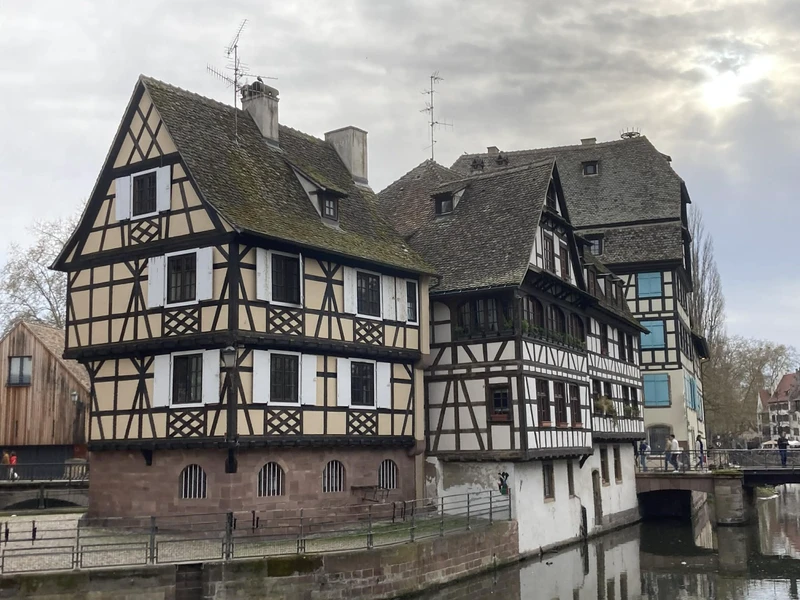
 A French gem to enjoy, Nice
I hope you enjoyed this post.
If you're serious about playing the French on a high level, I recently made a course based on 15 years notes and analysis, you can find it here.
If you like this style of writing, you can check out my book on chess stories, which you can find here.
It's a collection of short stories about the lives of chess champions; their quirks, battles, embarrassing moments, and strokes of luck.
I run the biggest school in Canada for kids and teenagers, we're currently accepting students for the spring term.
If you're interested, you can find more details here and do a level assessment here.
Finally, I have space for one last dedicated private student who really wants to achieve their goals. You can find out more details here.
Cheers!
You may also like
 IM theScot
Chess Stubbornness
A post about how chess lends itself to stubborn moves; on and off the board. thibault
How I started building Lichess
I get this question sometimes. How did you decide to make a chess server? The truth is, I didn't. GM Avetik_ChessMood
10 Things to Give Up to Enjoy Chess Fully
Discover how embracing a lighter mindset can help you enjoy chess again and achieve better results. IM theScot
The Deepest Moves of All Time
A post about moves that perplex, amaze, and blow our minds IM theScot
The Power of Will Power
A post about how will power is essential for every part of high level chess CM HGabor