
GM Alexander Bagrationi
Interview with GM Alexander Bagrationi alias DizzasterFritz - Lichess coach

Questions by David Moreno Rivilla
Hello, Alexander!
1) Thank you very much for taking the time for our interview. Welcome to the team! You are one of the new authors for Rochade. You are a Ukrainian Grandmaster, currently competing for Israel, and have been living in Germany for many years. What are your impressions of German chess culture in general?
Thank you very much for the invitation. I am very pleased to be part of the team and to write as a commentator and author about chess tournaments. I studied in Ukraine, then spent some time in Israel, and have now been living in Germany for many years. Even as a child, I heard about great tournaments in Germany, such as the famous events in Mainz. Germany has a very rich tournament culture with numerous open tournaments, and overall Europe plays a very important role in modern chess history.
2) You are very active in German tournaments. In 2021, you won the Sparkassen Online Open with a perfect 7/7 score – in that tournament, castling was played completely without castling rights. In 2025, you won the Cologne Open and in team chess, you play for SV Hemer. Is there a game you played in Germany that you remember particularly fondly?
When I came to Germany, I immediately began playing in various tournaments. Shortly after, however, the pandemic began, and traveling became difficult. Today I am trying to play as many tournaments as possible again. As a child, I heard the advice to play about ten tournaments a year to stay in form. So far, I have not played a game in Germany that has stuck particularly in my memory – but I hope that will change soon.
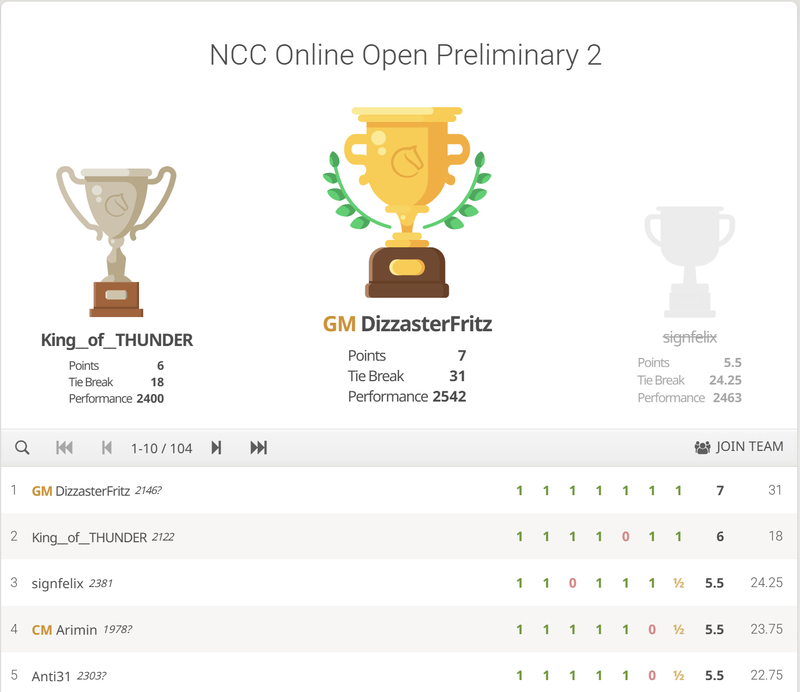
Sparkassen Online Open 2021 with a perfect 7/7 score https://lichess.org/swiss/TTOhLZAA
3) You also work actively as a coach on platforms like Lichess. Who exactly is your target audience?
The majority of my students are children from about eight years old, but I also work with adults. The level varies: from young players with their first tournament experience to players in the range of about 2000 to over 2300 Elo.
With stronger students, we work more intensively on openings, strategic understanding, and analyzing their games. However, training always remains very individual.
4) In your training, you place great emphasis on the strategic foundations from Aron Nimzowitsch's "My System." How relevant is this book today – more than a hundred years after its publication?
I think this book still conveys very good strategic understanding of the game. It explains many important concepts such as pawn chains or overprotection.
I learned about the book as a child – my brother read it to me when I was about ten years old. That's when I began to understand that every move in chess should have an idea behind it.
5) You are now 35 years old. At what age did you start playing chess? What memories do you have of that time?
I started playing at the age of six. My father simply took a chessboard out of the cupboard, and we played various board games at home.
My brother later joined a chess club and told his trainer about me – that's how I eventually came to chess training myself. Back then, there were hardly any computers, and many chess books still came from old library collections.
6) What is your greatest strength and what is your greatest weakness in chess?
That's hard to say. Sometimes I lost games already in the opening, sometimes in the endgame.
Today I often try to keep as many pieces on the board as possible to create complex positions and have more possibilities in the game.
7) Are there typical chess skills that you also apply in everyday life?
Chess promotes patience, concentration, and analytical thinking. You learn to calmly evaluate situations and make decisions consciously. Especially for children, I consider the game to be very valuable.
8) What was the most unusual experience you ever had at a chess tournament?
Once I won a game very quickly because I was able to repeat preparation from my analysis almost completely on the board.
Another time there was a misunderstanding with a player from Bulgaria, because the head movements for "yes" and "no" are exactly reversed there.
 Alexander is currently accepting new students via Lichess as well.
9) What is your personal goal for the chess year 2026?
I want to play as many tournaments as possible and hope to achieve a good result at the Amsterdam Open. In recent years, I keep trying to make it into the prize list there.
10) Do you have a favorite square on the chessboard?
No, neither a specific square nor a specific piece. I particularly like positions with many possibilities, where several ideas are possible simultaneously.
11) Which chess players do you admire particularly?
I particularly appreciate the games of Aaron Nimzowitsch and Salo Flohr. Flohr's positional play, especially in the Caro-Kann Defense, influenced me greatly as a child. Also, the story of the Polgár sisters impressed me very much, especially the extraordinary achievements of Judit Polgár.
 You can follow GM Bagrationi's games via https://lichess.org/fide/14104954/Bagrationi_Alexander
12) Is there a famous chess game that has particularly inspired you?
A famous game by Garry Kasparov, in which there were sometimes nine queens on the board. This position is very unusual and stays in the memory.
13) What advice would you give to our readers if they want to improve their play?
Opening:
At amateur level, you can play a lot of things in the opening as long as you follow the basic principles: piece development, king safety, and control of the center.
Middlegame:
In the middlegame, it is important to correctly assess the position, find a clear plan, and act accordingly. Sometimes the best plan is to prevent the opponent's plan.
Endgame:
In the endgame, special attention is necessary. Many players are already tired or running short of time at this point. Rook endgames occur very frequently, so it's worth studying them especially.
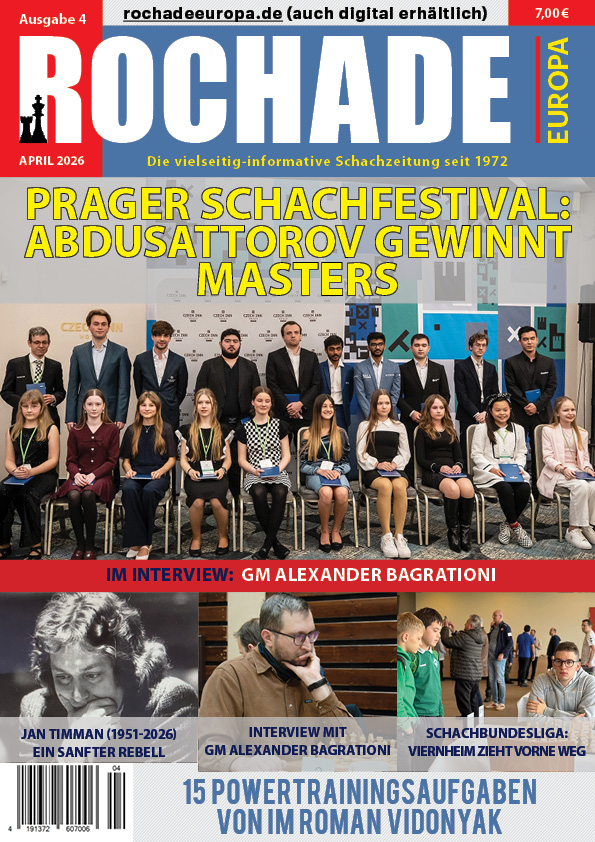
Note that this article was first published originally in German in the April 2026 issue of the German chess magazine Rochade Europa).
You may also like
 thibault
How I started building Lichess
I get this question sometimes. How did you decide to make a chess server? The truth is, I didn't. FM jeffforever
Interview with GM Christopher Noe alias gravereaper - Lichess streamer & coach
Get to know the 29-year-old GM, who likes to play in strong tournaments on a regular basis Lichess
Lichess: End of Year Update 2025
Is it just us, or has this year flown by? As we say goodbye to 2025 and enter 2026, let's look back … FM jeffforever
Interview with GM Zahar Efimenko - New German Women's Team Coach
Get to know the New German Women's Team Coach (Peak Elo: 2708 in March 2011) FM jeffforever
Interview with IM Lu Miaoyi & WGM Xu Yuanyuan
Get to know the Chinese prodigy IM Lu Miaoyi who won the Women's Tournament of the Sparkassen Chess … FM jeffforever