
How to Reach 1200: Insights from Kike, the Kind of Coach Every Beginner Needs
A new friend from the meetup, a passionate coach, and a simple roadmap to reach 1200
Hi!
How’s it going?
I’m just back from an amazing vacation in Mexico. I had been there before, but only in Cancún, and that’s like not really knowing Mexico. This time I got to know it better and I absolutely loved the country and its history.
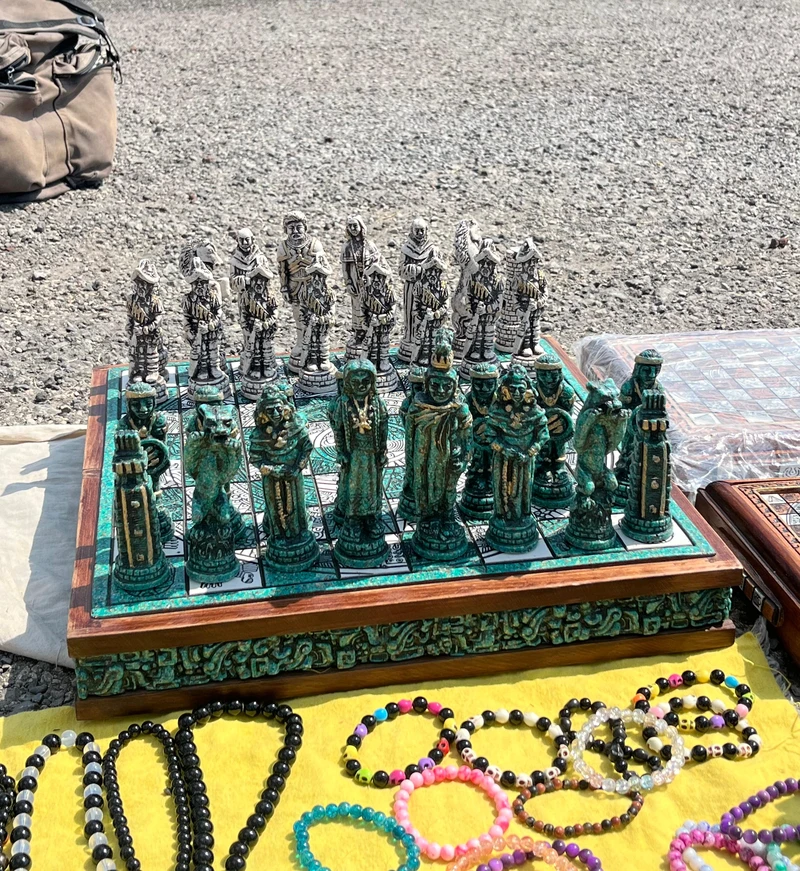
Incredibly, everywhere I went I saw chess sets, and the pieces were Spanish (colonizers) vs. Aztecs, according to a friend. Amazing! They were beautiful, but I didn’t have space in my suitcase to bring one home.
Anyway, right after coming back, I organized another chess meetup. Here’s a video https://www.instagram.com/p/DVtcvmkjTAQ/ that shows a bit of what the event is about: super relaxed, good vibes, and every level is welcome. The idea is to play without pressure, meet new people, and spend a different kind of Tuesday. So if you’re in Madrid tomorrow, Tuesday March 17, come to Malasaña and say hi, you’ll be more than welcome!
So today’s blog is about a new friend I met a few weeks ago at the meetup. Incredible! He reached out to me on TikTok (which I barely use) and asked if he could join the meetup. I said sure, and that’s how I met him.
His name is Kike, and that day we played and we made a draw, and I thought, “Wow, Kike plays well!” hahaha. Then I went to Mexico, and he basically helped a lot by taking care of the meetup’s online community: motivating everyone, giving free lessons... a real rockstar!
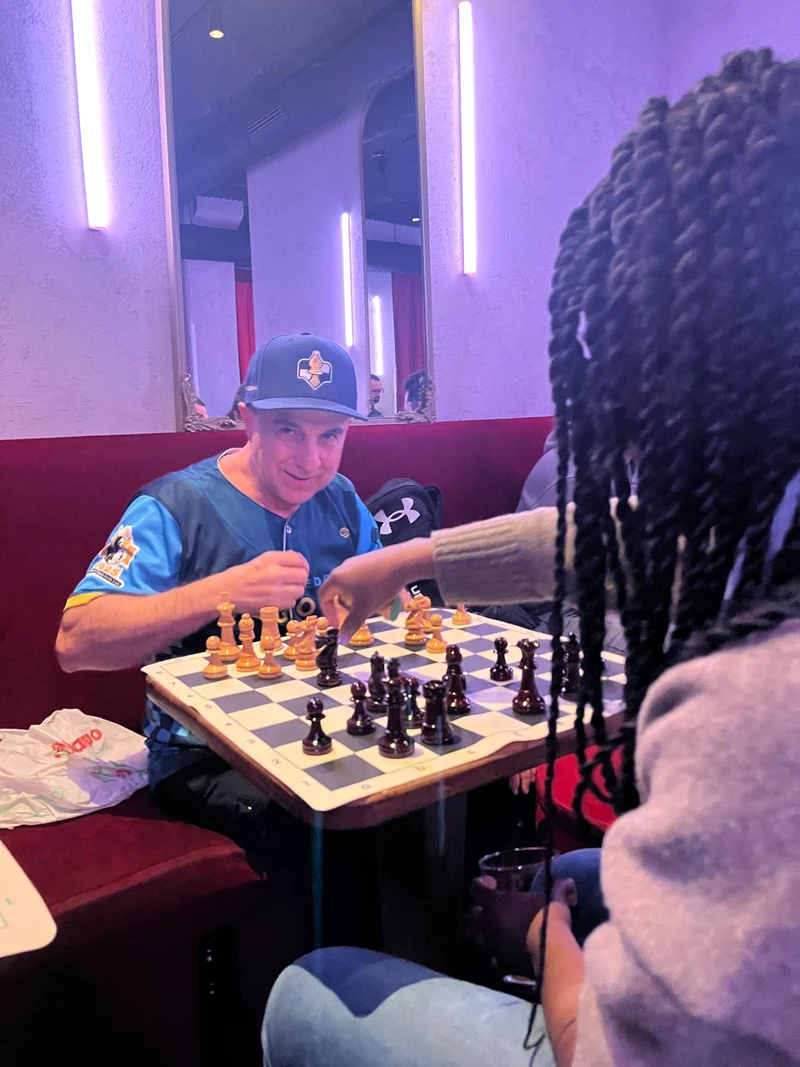
However, what really caught my attention, and what made me want to interview him, was seeing him at the last meetup taking the time to teach newcomers with so much passion. It reminded me of my first chess coach.
From my perspective, a good coach needs to be passionate. Forget about fancy titles, rating or strength doesn’t matter that much at the beginning. It makes little sense to look for a GM when you barely know how the pieces move or if you’re under 1200.
Of course, a coach needs knowledge and the ability to share it, but above all they need to motivate you and guide you psychologically, because chess is hard, and we all know it.
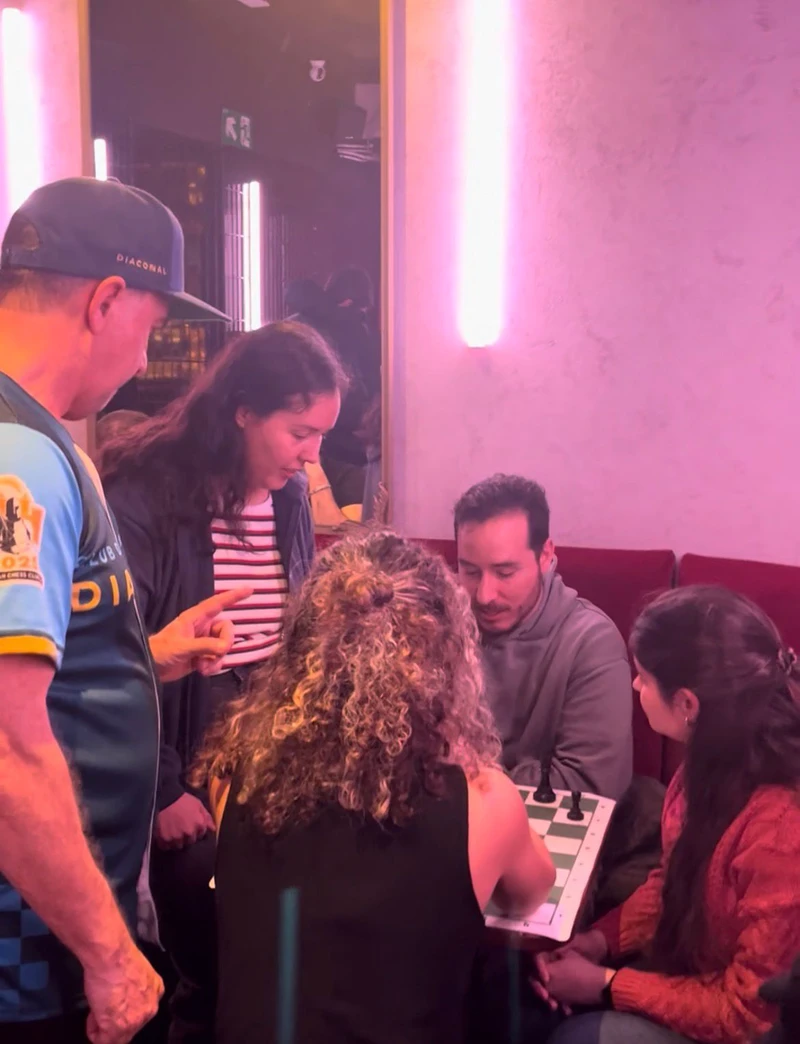
So now, let’s start Kike’s interview! I hope you enjoy it, and let me know if you want me to share more of his thoughts about teaching. Everyone has their own methods, and this blog post interview is all about that: getting to know different perspectives.
Kike is a certified chess instructor and a member of the Diagonal Chess Club in Alcorcón https://ajedrezdiagonal.es/, with which he competed in the last two editions of the European Team Chess Championship.
Kike also runs an online chess club on lichess.org that has been three-time Bundesliga champions during the pandemic, with over 4,000 members from dozens of countries, and that’s no small feat.
If you want to join, here’s the link: https://lichess.org/team/colegas-de-kike
You can always tell your friends you’re part of a team where players like Volodar Murzin, Mihail Marin, Jacob Aagaard, GM Ibarra, FM Ortega, GM David Lariño, and GM Yusnel Bacallao have competed... and now it’s your turn!
He also runs our new online chess club https://lichess.org/team/chessing_with_fla where the students can practise and play online tournaments. And his tiktok account is: https://www.tiktok.com/@el.gamusino
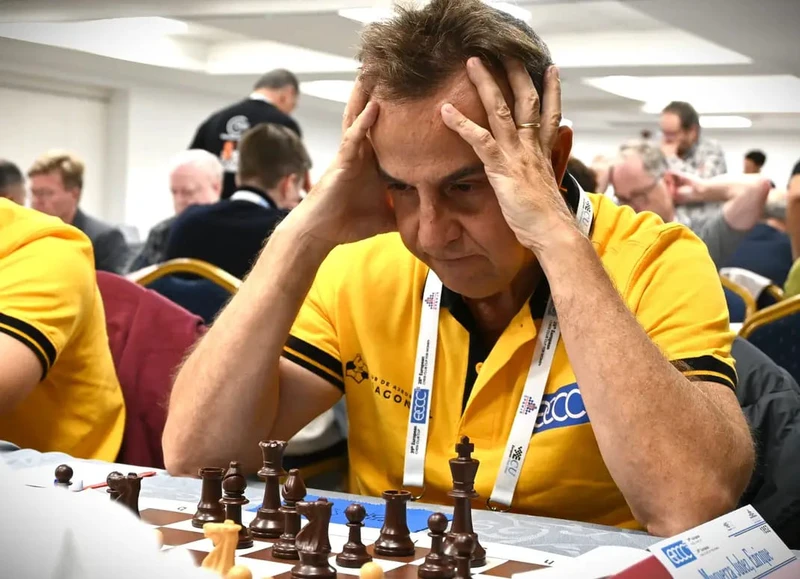
So Kike tell me!
1. How did you start playing chess, and what hooked you from the very beginning?
I started like many players: my father taught me when I was 7 or 8 years old. I was fascinated by the pieces’ movements, especially the knight’s famous “L” shape. It seemed magical to me.
Once I could beat him fairly easily, I started playing with classmates. Later, there was a stage when other sports and schoolwork took more space, and chess was left aside for a bit.
At 16, my sister took me to Peña Rey Ardid, a chess club in Bilbao that was thriving at the time. They played blitz every afternoon. The best part was that it didn’t matter which day you went, there was always someone ready to play. That atmosphere is what ultimately hooked me.
A book I was given called Modern Chess Tactics by Luděk Pachman fascinated me with its problems and also helped fuel my motivation for chess.
2. How long have you been a coach, and what have you learned most from teaching beginners?
First of all, I should say that teaching chess is a side activity for me; I’m not a professional coach. I have a degree in Computer Science and make a living in another field.
I have taught intermittently, first in Bilbao for about five or six years, then in Madrid for around four more years. Almost always with beginners, some starting completely from scratch. Many were children of neighbors or kids from the neighborhood.
The most important thing I’ve learned is that teaching chess isn’t just about conveying knowledge. The key is motivation. You want the student to develop a love for chess. So that when the class ends, they don’t just put the board away, they feel curiosity, open a book, watch a game, and want to keep exploring on their own.
3. If you had a complete beginner and the goal was to reach 1200 in a year, how would you structure a month-by-month plan?
It would be an indicative plan, as it depends on the student’s progress, but something like this:
- Month 1: Fundamentals. Piece movements and basic concepts: checkmate, stalemate, repetition, etc.
Month 2: Basic openings, just principles (development, controlling the center, not bringing the queen out too early). No memorization. - Month 3: Middlegame. The great beginner dilemma: “I’ve developed my pieces, now what?” Learn to make plans, spot weaknesses, and improve piece activity.
- Month 4: Basics of endgames. Simple king and pawn endings, and some rook endings.
- Month 5: Basic checkmates and typical patterns: king and queen vs. king, king and rook vs. king, classic checkmate schemes.
- Month 6: Basic calculation. Mental process for calculating variations without moving the pieces.
- Month 7: Start playing online with slow time controls (at least 10+5 or more).
- Month 8: Analyzing your own games: first without a chess engine, then with engine assistance.
- Month 9: Anticipation and prophylaxis: before moving, think about what your opponent wants to do.
- Month 10: Basic tactics with daily exercises.
- Month 11: More advanced tactics, puzzles, and support from explanatory videos by well-known chess educators
- Month 12: Pawn structures and deeper strategic concepts.
4. What should a player master before worrying about memorizing openings?
Understanding the position. Knowing what’s happening on the board is much more important than memorizing ten moves.
5. What are the three skills that most influence progress from 800 to 1200?
- Consistency. Without work, there is no progress.
- Mental toughness in the face of losses. My motto (not only for chess, but for life) is the famous quote from Irish writer Samuel Beckett: Try again. Fail again. Fail better.
- Critical analysis. Reviewing your own games and recognizing mistakes to avoid repeating them.
6. What mistakes do you see repeated over and over in players below 1000?
They lose material very easily. Until they internalize that giving away a pawn or piece can cost the game, it’s hard to improve.
7. If someone can only dedicate 2–3 hours a week to chess, how should they organize them?
Ideally, break it into small blocks:
-
20 minutes of tactics.
-
20 minutes of games (with friends or online).
-
20 minutes of analyzing those games.
The key is regularity.
8. Would you recommend using a book at this stage?
Yes, books are still very useful. Even though many young players are more used to online formats, combining both is ideal.
I recommend tactics exercises on Lichess, which are free, and explanatory videos by good chess educators. For me, Luděk Pachman’s Modern Chess Tactics books helped tremendously.
9. In the 0–1200 range, is a coach worth it, or can one reach this level independently?
You can definitely reach 1200 as a self-taught player. There is a lot of information available today. With discipline and consistency, it is entirely possible.
10. What concrete advantage does a coach provide that you can’t get by studying alone?
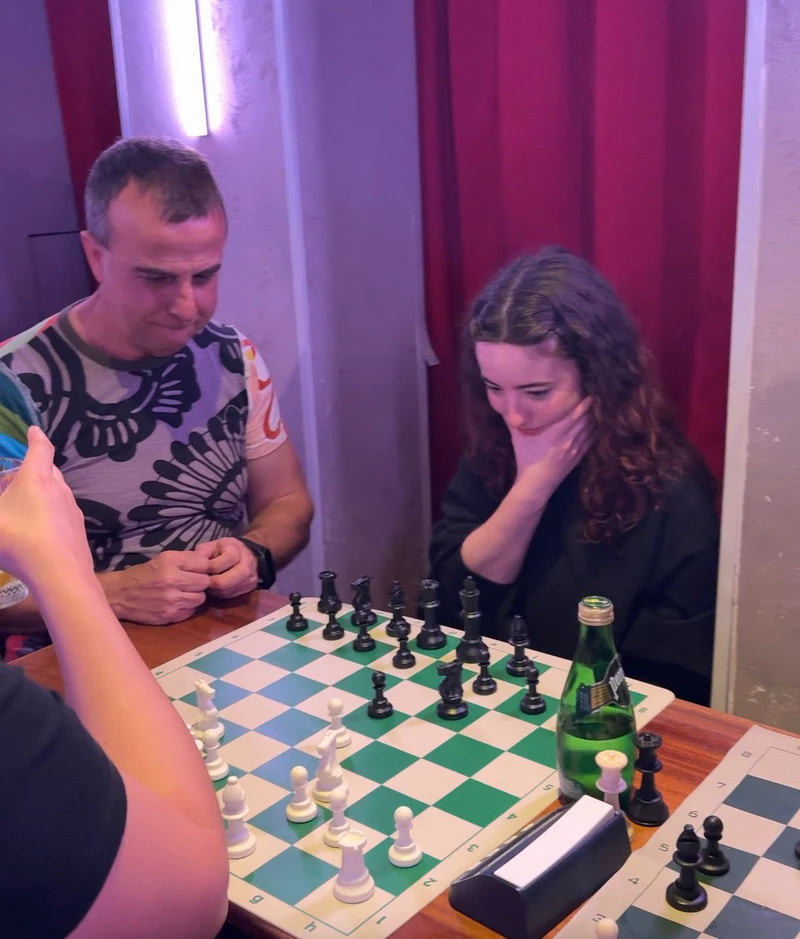
A coach brings a more human perspective to chess. They share personal experiences, answer doubts instantly, and, most importantly, help on a psychological level. Managing losses isn’t always easy when you’re alone.
11. As a coach also in youth baseball, what similarities do you see between training an athlete from scratch and a beginner chess player?
They are very different disciplines, but in the end, you’re working with kids.
In baseball, you first train the athlete and then the player, the physical part is fundamental. In chess, it’s not as critical, although being physically well always helps.
Both share something important: many rules and many possible decisions. The student needs to assimilate them gradually.
And even though baseball is a team sport, there are moments of complete solitude, like when the batter faces the pitcher. Emotional management is key there, just as in chess.
12. What psychological difference do you notice between a player who reaches 1200 and one who gets stuck at 900–1000?
Motivation. The player who reaches 1200 does it because they truly enjoy chess, they’re hooked. They aren’t forced to play.
There may be more or less talent, but in the end, hard work, passion, and perseverance allow even less “naturally gifted” students to achieve better results than others with more natural ability but less consistency.
Thank you so much for making it this far! To finish, Kike shared some puzzles he really likes for players at this level. I’m leaving the puzzles and their solutions here. If you enjoyed them, or if you have any suggestions or feedback, feel free to comment!
Puzzle 1: Black to play
Puzzle 2: Black to play
Puzzle 3: Black to play
Puzzle 4: White to play
And if you want to meet us in person and you’re in Madrid, come by tomorrow’s meetup.
See you at the board, and wishing you lots of checkmates!
You may also like
 WFM fla2021
6 Tips to Stop Throwing Won Positions in Chess
We’ve all been there: a winning position... and somehow it slips away. Chess is cruel, but the lesso… ChessMonitor_Stats
Where do Grandmasters play Chess? - Lichess vs. Chess.com
This is the first large-scale analysis of Grandmaster activity across Chess.com and Lichess from 200… WFM fla2021
How to Climb from 1600 to 1800: Four Coaches Share Their Experience!
Stuck at 1600? Four titled coaches (WFM, FM, IM & GM) share their secrets to reaching 1800, clear, p… thibault
How I started building Lichess
I get this question sometimes. How did you decide to make a chess server? The truth is, I didn't. WFM fla2021
Useful Tips for Beginners and Intermediates in Middlegame and Endgame
Developed, castled, controlled the center... then came the big question: Now what? Check this post t… WFM fla2021