
Remember When Magnus Was Asked How the Knight Moves?
Remember the moment when Andrea Botez asked Magnus Carlsen how the knight moves? It became a funny chess meme — but it also inspired a small puzzle experiment about chess piece geometry.Remember When Magnus Was Asked How the Knight Moves?
Some of you might remember the moment when chess streamer Andrea Botez asked Magnus Carlsen a very serious question:
“How does the knight move?”
Yes... the world champion was asked how the knight moves.
If you somehow missed that classic chess internet moment, here it is:
https://www.youtube.com/watch?v=gjMsHsd7N1Y
It became one of those small chess memes that resurfaces every now and then.
But the funny thing is — the question actually isn't that silly.
For beginners (and especially kids), the knight is the strangest piece in chess.
Every other piece behaves predictably.
- Bishops move diagonally
- Rooks move straight
- Queens do both
Then the knight arrives and says:
I'm going two squares this way... then one sideways... and I'm jumping over everything.
It's basically the parkour piece of chess.
The Real Difficulty in Chess: Geometry
After playing thousands of blitz and bullet games on Lichess, I noticed something about my own mistakes.
They often weren't deep strategic errors.
They were geometry mistakes.
Things like:
- “Wait... the knight can reach that square?”
- “Oh wow the queen actually covers that diagonal too.”
- “Right... the rook slides all the way until something blocks it.”
In fast chess, your brain is constantly doing spatial calculations.
Where can pieces go?
Which squares are attacked?
Which paths are blocked?
And under time pressure, those calculations go wrong surprisingly often.
So I Turned It Into a Puzzle Game
That idea eventually turned into a small browser puzzle game I built called Knight's Path.
The concept is simple:
You guide a chess piece through a maze to capture the king.
But every piece obeys real chess movement rules.
Pieces
♞ Knight
Moves in the familiar L-shape and jumps over obstacles.
♜ Rook
Slides in straight lines until something blocks it.
♛ Queen
Moves in all eight directions, which sounds powerful — but tight corridors make it tricky.
The Maze Elements
To make the puzzles interesting, the boards include things like:
- walls that block movement
- void squares you cannot land on
- enemy pawns guarding diagonal squares
- teleport portals
- crumbling tiles that collapse after you leave them
- gems that reward efficient paths
So the puzzle becomes a path-finding problem based entirely on chess geometry.
Why Kids Tend to Like It
Most chess training tools focus on:
- openings
- tactics
- endgames
But beginners often struggle with something more basic:
Where can my piece actually go?
For kids especially, the knight move is something they usually understand much faster by playing rather than memorizing.
Turning piece movement into a maze puzzle makes them naturally discover:
- knight reach patterns
- sliding piece movement
- diagonal control
- spatial planning
Interestingly, when I tested some levels, kids often solved them faster than adults.
Their brains are very good at maze logic.
A Small Example
Imagine a knight trying to reach the king across a maze.
Some squares are blocked.
A pawn is guarding diagonals.
Maybe there is a portal shortcut somewhere.
Suddenly the simple knight move becomes a mini path-finding puzzle.
It feels a bit like combining chess with a classic maze game.
Built by a Lichess Player
This project started mostly as a side experiment.
I've played thousands of games on Lichess and always enjoyed puzzles and level design.
So this was a fun way to combine:
- chess movement
- puzzle mechanics
- game design
If You Want to Try It
If the idea sounds interesting, you can try it here:
Knight's Path
https://eldorodo.itch.io/knights-path
No download needed — it runs directly in the browser and is free to play.
A Question for Chess Players
Which chess piece do you think is hardest to navigate in a maze?
Curious what others think.
Knights path puzzle game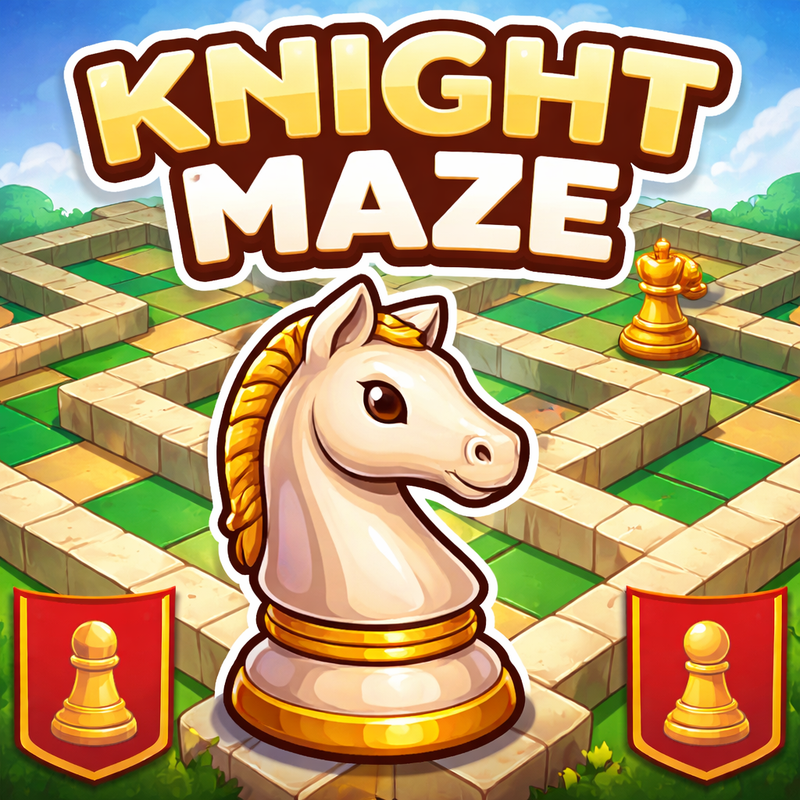
You may also like
 thibault
How I started building Lichess
I get this question sometimes. How did you decide to make a chess server? The truth is, I didn't. CM HGabor
How titled players lie to you
This post is a word of warning for the average club player. As the chess world is becoming increasin… FM MathiCasa
Chess Football: A Fun and Creative Variant
Where chess pieces become "players" and the traditional chessboard turns into a soccer field mullerrj
Imbalances
What are they and how they'll hep you create a detailed plan ChessMonitor_Stats
Where do Grandmasters play Chess? - Lichess vs. Chess.com
This is the first large-scale analysis of Grandmaster activity across Chess.com and Lichess from 200… GoldDame