Tactics Analysis #18
More positions I struggled with recentlyCurrent Puzzle Rating: 2362 (-36)
Current Puzzles Completed: 3200 (+100)
Not my best week for tactics problems this week. It was going OK until today when I started finding even simple tactics more challenging. Just a bad day I guess, nothing to be too worried about.
Position #1
https://lichess.org/training/dQNkC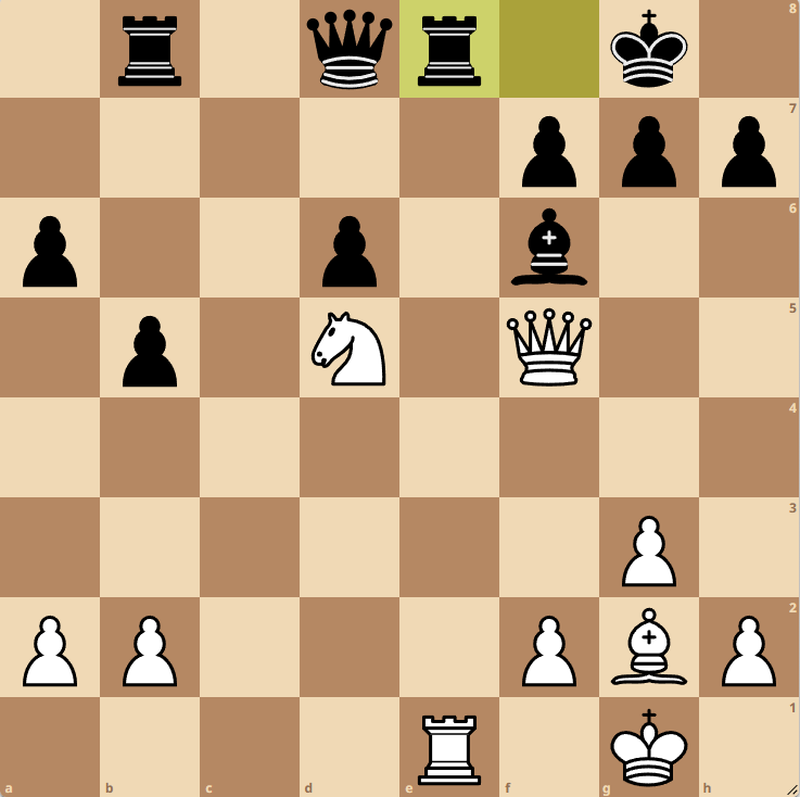
I have this marked down as one where I didn't even consider the option for the right move. I've written before about a tendency to have an idea, fail to prove it works, then play it anyway (sometimes this works OK, sometimes it doesn't). I was too busy looking at options for Nxf6 to consider the correct move.
SOLUTION
1. Nxe8 Qxe8 (completely forced for Black) 2. Be4 (threatens mate with Qxh7 Kf8 Qh8 so Black must respond. The queen for bishop trade is obviously favourable for White. g6 3. Nxf6+ Kf8 and practically any queen move is good for White)
Position #2
https://lichess.org/training/w7OL2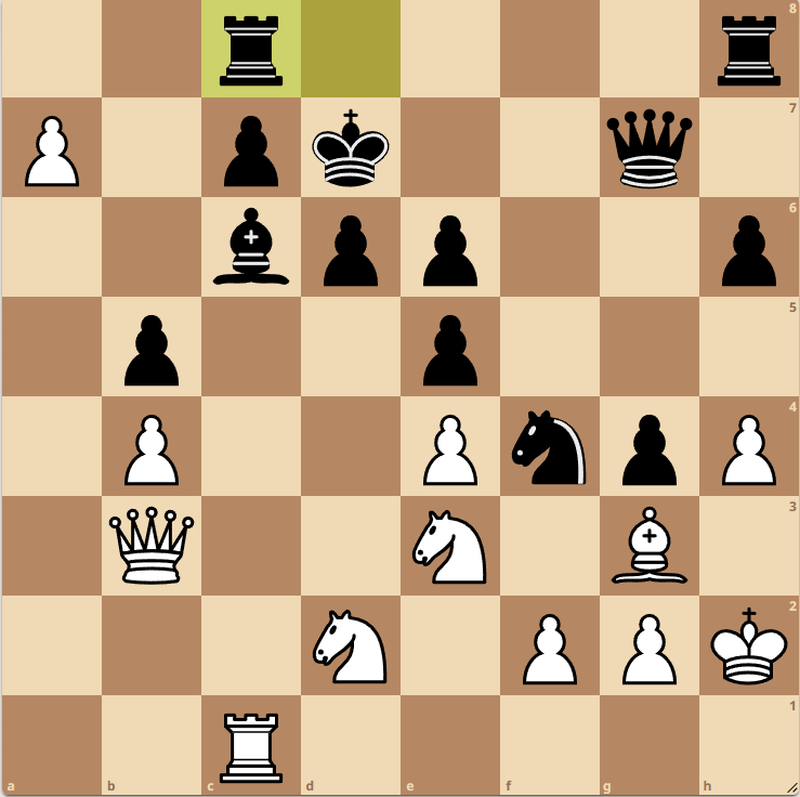
This one proved tricky again when I was resolving it. I think the tactical elements we should be exploiting are findable, but it was hard for me to look away from trying to push the a-pawn. First we have to notice that the bishop on c6 is weakly defended and has no additional defenders we can bring in, then we have to notice that the knight on f4 is weakly defended and the queen has no defenders whatsoever. If we can bring all this together, we can find the solution.
SOLUTION
1. Qc3 Ba8 (Bb7 is basically the same) 2. Bxf4 (only works because exf4 now would expose the queen) Rhg8 3. Bg3
Position #3
https://lichess.org/training/D8WQX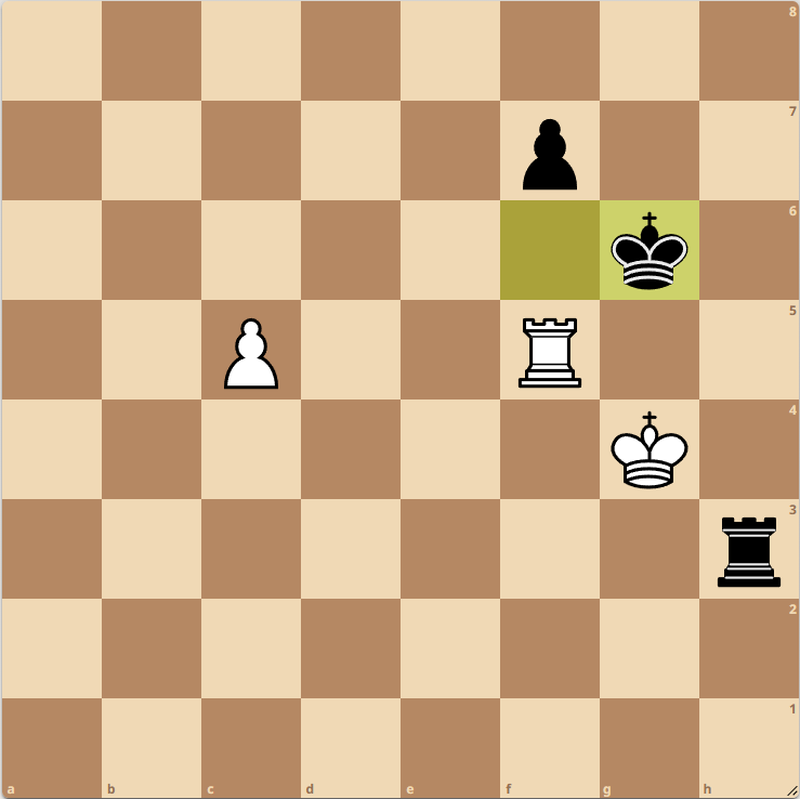
Rook endgames are often sources of precise tactical sequences.
We have the option here to exchange rooks into a king and pawn endgame, but the Black king is close enough to stop the pawn and the game probably goes to a draw (for example, 1. Kxh3 Kxf5 2.c6 Kd6 - White can not support his pawn and it can't get away from the Black king). Since that doesn't work, we can see that variants like 1. Rxf7 Kxf7 2. Kxh3 Ke7 3. c6 Kd6 don't work either. Given that, I looked at the only other idea, moving the king towards the pawn with 1. Kf4 but White can't force a win (1. Kf4 Rc3 2. Ke4 Rc4+ and then 3. Kd3 Rxc3+ and Black wins the resulting K+P endgame, or 3. Kd5 Kxf5 4. Kxc4 Ke6 and the White king can't force its way through to control the promotion square and they'll end up trading away the pawns).
So what on earth is the answer? Well it turns out I missed an idea in my original analysis of the exchange line. White needs to move the Black king away from the passed pawn and can do this with a forcing move
Solution
1. Rg5+ Kf6 2. Kxh3 Kxg5 3. c6 (now the Black king is too far away to catch the pawn)
Position #4
https://lichess.org/training/9ZN5J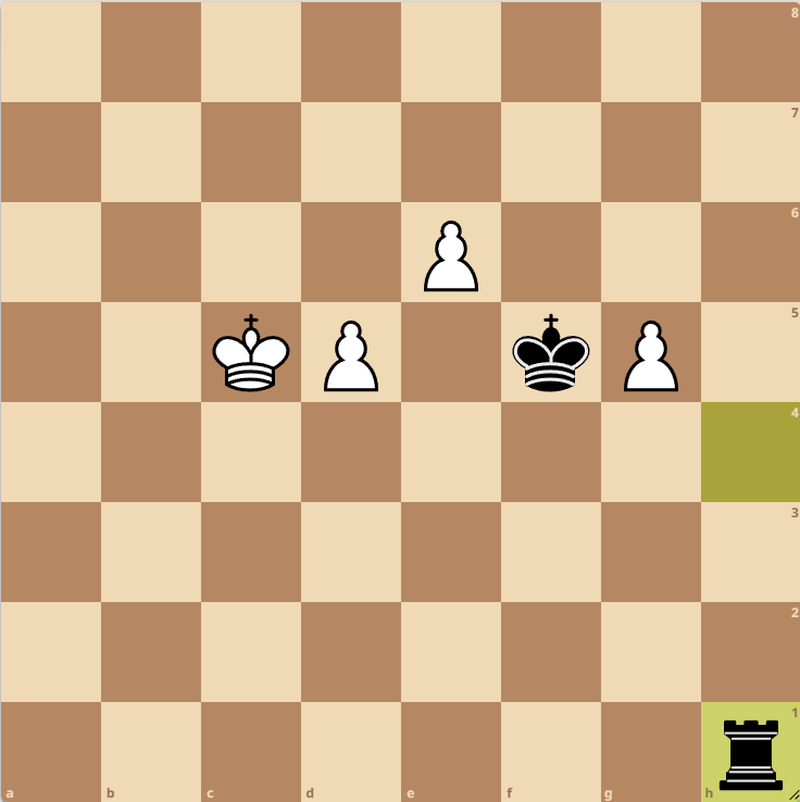
Finishing with another endgame position, but here only one side has a rook and the White side is obviously trying to promote.
I considered two main options here on the first move - e7 or Kd6.
1. Kd6 then has two good defences - Re1 or Kxg5 (Black will play them both eventually, and can play either one first). So 1. Kd6 Re1 2. e7 Kxg5 3. Kd7 Kf6 4. 38=Q Rxe8 5. Kxe8 Ke5 and the position is drawn). Very tough to find this from the starting position, at least for me, and there are some alternative moves like 2. Kd7 to consider.
What about the immediate 1. e7? If Re1, d6 provides support to the pawn (for example, 1. e7 Re1 2. d6 Re6 3. d7 and we will promote). If Rh8, 2. d6 doesn't work because of Ke6 controlling the pawns but Kd6 does work by keeping the king away.
SOLUTION
1. e7 Rh8 2. Kd6 Rg8 3. Kd7
