Exploring Responses to 1.e4: From Classical Foundations to Creative Chaos
When a game of chess begins, White's best move and most played is E4, so it's better to know how to counter it and what not to do .The king’s pawn opening 1.e4 is one of the most popular and ambitious ways to begin a game of chess. It immediately stakes a claim in the center, opens lines for both the queen and bishop, and sets the stage for dynamic, attacking play. Over centuries of theory and practice, players—both amateur and world champion alike—have explored countless ways to respond to this bold first move.
This collection of short articles dives into the rich and varied world of responses to 1.e4, from time-honored classical defenses to bizarre and unorthodox systems. You’ll find legendary openings like the Caro-Kann, the French Defense, and the Sicilian, which offer deep strategic ideas and have stood the test of time. You’ll also encounter wild and experimental lines such as the Borg Defense, Adams Defense, or Mirrored Amar, where creativity often trumps convention.
Each article follows the same format: a brief, accessible overview of the key ideas, goals, and character of the response—perfect for curious learners, casual players, or anyone looking to explore the immense variety of chess.
Whether you’re preparing a solid defense, hoping to surprise your opponent, or simply exploring the beauty of chess theory, this guide will take you on a journey through the many faces of 1.e4.
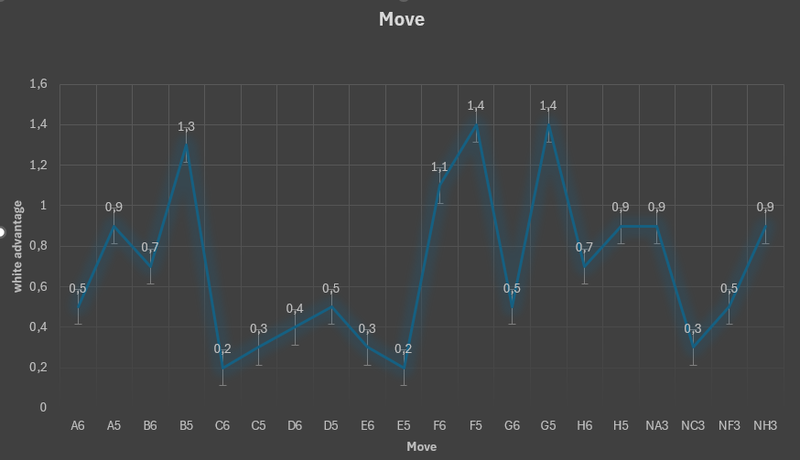
The Open Game : with an advantage of + 0,2 for the whites
The opening 1.e4 e5, often referred to as the Open Game, is the most classical and time-tested response to the king's pawn. This symmetrical reply directly contests the center and leads to a wide variety of rich, tactical, and strategic positions. It has been played for centuries at all levels of chess, from casual games to world championship matches.
By playing 1...e5, Black immediately stakes a claim to the center and opens lines for both the queen and the king’s bishop. Unlike some hypermodern defenses, the Open Game is based on direct confrontation, piece activity, and rapid development. It leads to open positions, where both sides have opportunities for sharp tactical play and dynamic attacks.
After 2.Nf3, White targets the e5 pawn, prompting Black’s most common reply: 2...Nc6. From here, a vast network of openings becomes available: the Ruy Lopez, Italian Game, Scotch Game, Petrov Defense, and more. Each system has its own character, ranging from the positional maneuvering of the Ruy Lopez to the immediate central clash of the Scotch.
One of the main appeals of the Open Game is its balance between activity and solidity. Black doesn’t concede space like in the Caro-Kann or French, nor does it enter the deep theoretical waters of the Sicilian immediately. Instead, both players engage in a mutual battle for the center, rapid development, and control of key squares.
This opening has been a favorite of great champions like Bobby Fischer, Magnus Carlsen, Garry Kasparov, and José Raúl Capablanca. Fischer famously said, “1.e4—best by test,” and consistently relied on 1.e4 e5 structures throughout his career.
In conclusion, the Open Game offers clean development, open lines, and rich tactical possibilities. For players who enjoy direct, classical chess with a balance of strategy and tactics, 1.e4 e5 remains one of the most instructive and rewarding battlegrounds in the game.
The Caro-Kann Defense : with an advantage of + 0,2 for the whites
The opening 1.e4 c6, known as the Caro-Kann Defense, is a solid and resilient response by Black to the king’s pawn. Named after Horatio Caro and Marcus Kann, who analyzed it in the 19th century, this defense is built on classical principles, yet with a unique twist—it avoids the symmetrical and sometimes sharp lines of 1...e5 in favor of a slower, sturdier approach to contesting the center.
The idea behind 1...c6 is to prepare the move ...d5, striking at White’s center without immediately exposing Black’s position. After 2.d4 d5, Black can respond to 3.Nc3 or 3.e5 with flexible and strategic setups. Unlike the French Defense, the Caro-Kann doesn’t block in the light-squared bishop—this gives Black more breathing room and a smoother path to development.
The Caro-Kann is known for its solid structure, especially in the Advance Variation (1.e4 c6 2.d4 d5 3.e5), where Black often responds with ...Bf5 and ...e6, aiming for a sturdy pawn chain and long-term piece activity. In the Exchange Variation (3.exd5 cxd5), the symmetry often leads to quiet but strategic battles, where maneuvering and endgame knowledge are key. There’s also the aggressive Panov-Botvinnik Attack, where White tries to open the center early and punish any passivity.
This defense has been favored by many world champions, including Capablanca, Petrosian, Karpov, and Anand. Karpov in particular made it a centerpiece of his repertoire, demonstrating how deep positional understanding and patient play can nullify White’s early initiative.
While the Caro-Kann may lack the tactical fireworks of the Sicilian or the King's Gambit, it offers clarity of plans, strong defensive potential, and a solid foundation into the endgame. It's an ideal choice for players who prefer structure, resilience, and flexibility.
The Sicillian Defense : with an advantage of + 0,3 for the whites
The opening 1.e4 c5, known as the Sicilian Defense, is one of the most dynamic and ambitious responses by Black to the king's pawn opening. Unlike 1...e5, which often leads to open and symmetrical games, the Sicilian immediately breaks symmetry and introduces structural imbalance, setting the stage for a rich and complex battle.
By playing c5, Black contests the center indirectly, avoiding early exchanges while preparing counterplay on the queenside. Delaying the move d5, Black keeps the position flexible and sharp. This imbalance offers Black numerous tactical and strategic possibilities, making the Sicilian ideal for players who seek winning chances with the Black pieces.
The Sicilian Defense often leads to semi-open positions where White maintains a central majority while Black gains counterplay along the c- and b-files. Among the many famous variations are the Najdorf, Dragon, Sveshnikov, and Scheveningen, each with its own unique plans and complexities.
Highly popular at all levels—from amateur games to world championships—the Sicilian has been a cornerstone of the repertoire of legendary players like Bobby Fischer, Garry Kasparov, and more recently, Magnus Carlsen. While it demands solid theoretical preparation, the Sicilian offers Black excellent chances to play for a win while maintaining a resilient structure. It’s a fighter’s choice: rewarding creative and aggressive players who thrive in sharp, strategic battles.
The French Defense : with an advantage of + 0,3 for the whites
The opening 1.e4 e6, known as the French Defense, is a solid and resilient response by Black to the king’s pawn opening. Instead of engaging in immediate symmetry with 1...e5, the French Defense aims to control the center with the move d5, supported by the e6 pawn, creating a strong and compact structure.
Black’s idea is simple but deep: challenge the e4 pawn with d5 and accept a temporary cramping of the light-squared bishop in exchange for long-term positional benefits. This often leads to closed or semi-closed positions where maneuvering, strategic planning, and pawn structure play a crucial role. In many variations, White gains space, but Black enjoys solid counterplay and clearly defined plans.
The French Defense can lead to several key structures: the Advance Variation (2.d4 d5 3.e5), where White gains space but commits early; the Exchange Variation (3.exd5), leading to a more symmetrical and drawish structure; and the Tarrasch Variation (3.Nd2), which avoids early piece exchanges and aims for flexibility. Each variation presents its own strategic challenges.
While sometimes criticized for the temporary passivity of the c8 bishop, the French Defense compensates with excellent central tension, firm pawn chains, and rich counterattacking chances—especially on the queenside or by targeting the base of White’s pawn chain. It has been used by many top players, including legends like Botvinnik, Korchnoi, and more recently, Wesley So.
The French is ideal for players who prefer structure over chaos, strategy over tactics, and are willing to patiently outmaneuver their opponent. With deep theory and clear plans, it remains one of the most respected and time-tested defenses against 1.e4.
The Pirc Defense : with an advantage of + 0,4 for the whites
The opening 1.e4 d6, known as the Pirc Defense, is a hypermodern response by Black to the king’s pawn opening. Instead of contesting the center immediately with pawns, Black invites White to occupy it early with 2.d4 and 3.Nc3, planning to strike back later with moves like ...Nf6 and ...g6.
The Pirc embodies the hypermodern philosophy: allow the opponent to build a strong center, then challenge it with timely piece pressure and counterattacks.
Black often follows up with ...Nf6 and ...g6, preparing to fianchetto the dark-squared bishop on g7, where it will exert long-range pressure on the central light squares. The setup is flexible and resilient, allowing Black to adapt based on White’s chosen variation—whether it be the aggressive Austrian Attack (with f4), the Classical Development, or the quieter 4.Be2 lines.
The Pirc Defense typically leads to asymmetrical and strategic positions, where deep understanding and patience are key. Black accepts a slight space disadvantage in the early game, but in return gains dynamic chances, particularly with pawn breaks like ...e5 or ...c5, and potential counterplay on the kingside.
Although once considered risky at the highest levels, the Pirc has been played successfully by grandmasters such as Boris Gelfand, Teimour Radjabov, and even Magnus Carlsen in select games. It appeals to players who enjoy flexible positions, rich middlegame plans, and the opportunity to steer the game away from heavily analyzed mainstream lines.
The Pirc is not about immediate equality—it’s about outplaying the opponent in a complex middlegame. For players who like to fight for the initiative from a solid, slightly unorthodox base, the Pirc remains a fascinating and ambitious choice against 1.e4.
The Scandinavian Defense : with an advantage of + 0,5 for the whites
The opening 1.e4 d5, known as the Scandinavian Defense (or Center Counter Defense), is one of the most direct and straightforward responses to the king’s pawn opening. With this immediate central challenge, Black strikes at the e4 pawn on move one, aiming to simplify the position and develop rapidly.
After 2.exd5 Qxd5 or 2...Nf6 (the modern variation), Black accepts a temporary lead in development for White in exchange for active piece play and clear central strategy. The early queen sortie in lines with 2...Qxd5 can appear risky, but after a retreat like ...Qa5 or ...Qd6, Black usually regroups efficiently and avoids major threats. The ...Nf6 variation delays the queen capture, improving coordination and often leading to more dynamic middlegames.
The Scandinavian tends to lead to open positions where quick development and central control are vital. Black typically follows up with ...Nc6, ...Bg4 or ...Bf5, and ...e6, constructing a solid but slightly unorthodox setup. Although some critics see the early queen development as a concession, modern analysis has shown that Black’s position remains healthy with accurate play.
Used occasionally by top players like Magnus Carlsen and Viswanathan Anand, and regularly by strong practical players like Sergei Tiviakov, the Scandinavian appeals to those who want a simple yet fighting response to 1.e4, often catching opponents off guard.
It is a defense that trades some traditional principles for practical effectiveness: fast development, central pressure, and easy-to-understand plans. Whether you're seeking a surprise weapon or a mainstay of your repertoire, the Scandinavian is a bold and effective way to meet 1.e4 head-on.
The Modern Defense : with an advantage of + 0,5 for the whites
The opening 1.e4 g6, known as the Modern Defense, is a hypermodern and flexible response to the king’s pawn opening. Rather than contesting the center immediately with pawns, Black aims to control it from a distance using pieces—particularly by fianchettoing the dark-squared bishop with ...Bg7. This setup allows Black to delay committing the central pawns and react based on White’s chosen structure.
After 1.e4 g6 2.d4 Bg7, Black typically follows up with ...d6 and ...Nf6, entering a flexible setup that can transpose into other systems, such as the Pirc Defense, King’s Indian, or even lines from the Robatsch variation. This flexibility makes the Modern a powerful psychological weapon, as it allows Black to steer the game into unfamiliar territory early on.
The Modern Defense often leads to complex, asymmetrical positions where patience and strategic maneuvering are crucial. Black invites White to take space in the center with the plan of undermining it later with pawn breaks like ...c5 or ...e5. Meanwhile, the fianchettoed bishop on g7 exerts constant pressure on the central light squares, especially e4 and d4.
While some classical principles are set aside—like occupying the center early—the Modern offers long-term dynamic potential and is well suited to players who enjoy flexibility, counterpunching opportunities, and rich middlegame plans. It's a favorite of creative and resourceful players like Tiger Hillarp Persson and has also been employed by elite players, including Hikaru Nakamura and Magnus Carlsen, as a surprise weapon.
The Modern Defense is not for the faint-hearted: it requires precise timing, positional understanding, and a readiness to handle sharp counterattacks. But for those who embrace its unorthodox nature, it offers an exciting and viable alternative to traditional e4 defenses.
The St. George Defense : with an advantage of + 0,5 for the whites
The opening 1.e4 a6, known as the St. George Defense, is one of the most unorthodox and provocative replies to the king’s pawn opening. At first glance, the move ...a6 appears to do nothing to contest the center or develop pieces—but that is precisely the point. The St. George is all about inviting White to overextend while Black prepares a counterpunch from the flanks.
The typical idea behind ...a6 is to support a quick ...b5 and a queenside fianchetto with ...Bb7. While White often occupies the center early with 2.d4, Black delays central confrontation in favor of building pressure from the wings—true to hypermodern principles. The structure is flexible, and can transpose into offbeat versions of the Modern Defense or even the Owen’s Defense (1.e4 b6).
Though not widely used at top levels, the St. George gained notoriety when Tony Miles famously used it to defeat World Champion Anatoly Karpov in 1980—a game that cemented the opening’s reputation as a daring and viable surprise weapon. Since then, it has been occasionally adopted by creative players looking to avoid mainstream theory and unsettle their opponents early on.
The St. George Defense leads to asymmetrical, slow-burning positions where psychological factors matter just as much as objective evaluation. White is tempted to seize space and initiative, but Black’s plan revolves around solid development, sharp counterplay on the queenside, and undermining the center once White is committed.
It may not be considered entirely sound by classical standards, but in practical play, especially at the club level, the St. George can be both annoying and effective. For players who enjoy unconventional paths and are confident in their strategic understanding, 1...a6 can become a dangerous and flexible weapon.
The Owen’s Defense : with an advantage of + 0,7 for the whites
The opening 1.e4 b6, known as the Owen’s Defense, is a rare and offbeat response to the king’s pawn opening. With this quiet-looking flank move, Black prepares to fianchetto the queen’s bishop with ...Bb7, placing it on the long diagonal to pressure the central light squares—especially e4 and d5. Rather than fighting for the center immediately, Black adopts a hypermodern stance, aiming to undermine White’s center from a distance.
After 1.e4 b6 2.d4 Bb7, Black usually follows up with ...e6 and ...Nf6, creating a flexible setup that can transpose into lines of the Modern or even French Defense, depending on White’s choices. The idea is to allow White to build a broad pawn center, then challenge it later with pawn breaks like ...c5 or ...d5, while activating the powerful fianchettoed bishop.
The Owen’s Defense often leads to asymmetrical, slow-developing positions where strategic understanding outweighs rote memorization. While White typically gains more space early on, Black gets solid, resilient positions with hidden tactical resources and counterplay potential on the queenside or center.
Though not commonly played at the highest level, the Owen’s Defense has been used successfully by strong players such as Bent Larsen and, on occasion, by English GM Nigel Short. It’s especially effective as a surprise weapon—catching opponents off guard and steering the game away from heavily analyzed mainlines.
The main criticism of the Owen’s Defense is that it can be slightly passive if Black doesn't play energetically. However, with accurate play, it can provide a solid and unconventional foundation for dynamic counterattacks.
For players who enjoy flexible, unorthodox setups and want to drag their opponents into less familiar territory, the Owen’s Defense is a refreshing and resourceful choice against 1.e4.
The Carr Defense : with an advantage of + 0,7 for the whites
The opening 1.e4 h6, known informally as the Carr Defense, is one of the most unorthodox and offbeat responses to the king’s pawn opening. At first glance, the move appears to do nothing to contest the center, develop a piece, or prepare any immediate plan. And that’s precisely why it catches attention—it breaks virtually every classical opening principle.
Named after the American master John Carr, who experimented with it in the mid-20th century, 1...h6 prepares a possible ...g5 push, or simply limits the scope of White’s minor pieces, such as preventing Bg5 in some setups. However, it does so at the cost of a valuable tempo and concedes central space and initiative to White from the start.
After 2.d4, White typically takes full control of the center unopposed, while Black lags in development. Any counterplay from Black must be carefully timed and backed by creative thinking and deep understanding of unbalanced positions. Plans may involve ...g5 and ...Bg7 to fianchetto the bishop, or transpositions into more familiar territory via ...e6 and ...d5—but all come with a price.
The Carr Defense is exceedingly rare at any serious competitive level. It has seen very limited practical success, though a few adventurous players have used it in blitz or rapid games as a surprise weapon. The psychological aspect is key: if White is unsure how to respond, the unusual nature of the move can lead to overconfidence or inaccuracies.
Objectively, 1...h6 is not considered sound. It offers White an easy advantage with natural play. However, for creative players who enjoy provoking their opponents and playing from unconventional positions, the Carr Defense can be a fun—and chaotic—way to avoid theory and explore pure chess.
It’s not recommended as a mainline weapon, but as a curiosity or for blitz, it definitely has entertainment value.
The Ware Defense : with an advantage of + 0,9 for the whites
The opening 1.e4 a5, known as the Ware Defense or sometimes the Corn Stalk Defense, is one of the most unorthodox and dubious responses to 1.e4. Named after Preston Ware, a 19th-century American player known for his love of offbeat openings, this move violates virtually all classical principles of opening theory.
By playing ...a5 on the first move, Black does not develop a piece, challenge the center, or aid kingside safety. The only tangible effect is controlling the b4-square, which rarely holds much significance this early in the game. White, in turn, is free to occupy the center with 2.d4 and quickly develop with tempo, gaining a clear advantage from the start.
There is no established or coherent follow-up for Black after 1...a5. Players who adopt this move often aim to drag the opponent into unfamiliar territory or play psychological chess, hoping to provoke overconfidence or disorientation. Some may follow up with ...d6, ...Nd7, ...e5 or ...g6 setups, but by that point, White already enjoys a lead in space and development.
The Ware Defense is virtually never seen at serious competitive levels and is generally considered unsound. However, it occasionally appears in blitz or bullet games, where surprise value and time pressure can lead to practical results. Its primary appeal is not in objective strength, but in shock factor and forcing an opponent out of their comfort zone.
In essence, 1...a5 is not a defense in the traditional sense—it's a provocation. For players who value creativity over convention, and chaos over clarity, the Ware Defense offers an amusing detour from mainstream chess. But for those seeking reliable and principled openings, it's best kept as a novelty.
The Goldsmith Defense : with an advantage of + 0,9 for the whites
The opening 1.e4 h5 is one of the most eccentric and provocative first moves in response to the king’s pawn. Known by several names—Goldsmith Defense, Pickering Defense, Rook Gambit, or Reversed Kadas Variation—this move is more of a curiosity than a legitimate opening strategy in serious play.
By playing ...h5, Black does nothing to contest the center, develop a piece, or prepare for kingside safety. Instead, the move weakens the kingside and creates long-term vulnerabilities, particularly if the king intends to castle short. The only real "idea" behind the move is a speculative ...h4 push, attempting to disrupt White’s development or provoke an early imbalance—but this is rarely effective against accurate play.
White typically responds with 2.d4 and quickly seizes full control of the center. Black is already in a reactive posture, and unless White makes serious inaccuracies, the position becomes strategically difficult for Black within a few moves. In some variations, Black may attempt to transpose into a kind of bizarre Modern Defense with ...g6 and ...Bg7, but with the h-pawn already committed, the kingside is severely compromised.
The opening has virtually no theoretical standing and is almost never seen in classical or serious competitive chess. Its use is mostly limited to bullet or blitz games, or for entertainment and surprise value. Even then, it often backfires against prepared or calm opponents.
That said, 1...h5 embodies a playful and rebellious spirit. For those who enjoy breaking conventions, confusing their opponents, or simply exploring chess as an art form rather than a science, the Goldsmith or Pickering Defense can be a chaotic and amusing diversion from standard opening play.
But from a practical standpoint, it’s closer to a dare than a defense.
The Barnes Defense : with an advantage of + 1,1 for the whites
The opening 1.e4 f6, known as the Barnes Defense, is one of the most dubious and self-weakening responses to the king's pawn. Named after 19th-century English player Thomas Wilson Barnes—who famously used unorthodox openings to defeat Paul Morphy—the move ...f6 is generally regarded as a serious positional mistake rather than a legitimate defense.
By playing ...f6 on move one, Black neither develops a piece nor contests the center. Worse, the move severely weakens the kingside, especially the e8–h5 diagonal, and takes away the natural square for the g8-knight. It also opens the door to dangerous early tactics from White, particularly involving Qh5+ and Bc4, as seen in traps like the Fool's Mate or similar themes.
After 2.d4, White immediately grabs the center and prepares for fast development. Black is already on the defensive, with no clear way to challenge White’s initiative. Moves like ...e6 and ...d5 can try to stabilize the position, but they come late and often allow White to build up a strong attack.
The Barnes Defense has no serious standing in modern opening theory and is extremely rare at all levels of play. Its only practical use is as a psychological or surprise weapon in ultra-fast time controls, where the opponent might underestimate it or overthink an obvious advantage.
Despite its shortcomings, the Barnes Defense remains an interesting historical curiosity. It reminds us that even questionable moves can have rich stories behind them—but in practical terms, 1...f6 is one of the weakest legal replies to 1.e4.
In short: high risk, no reward.
The O'Neill Gambit : with an advantage of + 1,3 for the whites
The opening 1.e4 b5, known as the O'Neill Gambit, is an extremely rare and speculative response to the king’s pawn. With this flamboyant flank pawn thrust, Black offers the b5 pawn as a gambit on move one, with the idea of diverting White from central plans or luring them into unfamiliar territory.
After 2.Bxb5, Black typically aims to play ...Bb7 and develop quickly, hoping for active piece play and potential counter-pressure on the e4-pawn or light squares. However, this comes at a serious cost: Black has willingly given up a flank pawn and gained very little compensation in return. If White plays precisely, the result is usually a clear advantage, both in material and development.
The O'Neill Gambit is not grounded in classical principles. It doesn't fight for the center, it weakens the queenside structure, and it gives White an immediate pawn lead with no concrete drawbacks. Still, it has a certain psychological appeal. In blitz or bullet games, where surprise and confusion can be weapons in themselves, 1...b5 may succeed in throwing an unprepared opponent off balance.
That said, objectively, the gambit is unsound. It offers no lasting initiative or structural compensation and is not endorsed by modern opening theory. It’s rarely, if ever, seen in master-level games and is largely confined to casual, online, or novelty-based chess.
In essence, the O'Neill Gambit is more about fun and flair than solidity or strategy. For players who enjoy chaos, surprise, or just making their opponents think twice on move two, it can be an entertaining sideline. But for those aiming for consistent results, there are far more reliable defenses to 1.e4.
The Fred Defense : with an advantage of + 1,4 for the whites
The opening 1.e4 f5, known as the Fred Defense or sometimes the Duras Gambit, is one of the most unsound and provocative replies to the king’s pawn opening. By advancing the f-pawn on move one, Black aims to challenge the e4-square immediately—but in doing so, creates severe weaknesses and neglects core opening principles.
The move ...f5 exposes Black’s king, weakens the entire kingside (especially the diagonal e1–h4), and does nothing to aid development or control the center with pawns or pieces. After the natural response 2.exf5, White immediately gains a central pawn and opens the e-file, giving potential for rapid development and tactical threats—particularly involving Qh5+ or Bc4+, which can lead to quick disaster for Black if they are not extremely careful.
Historically, the line has been associated with both Fred Reinfeld, who gave it its sarcastic name, and Oldřich Duras, who reportedly experimented with it on rare occasions. However, it has never been considered viable at any serious competitive level. It’s sometimes used in blitz or bullet games as a novelty or trap weapon, banking on surprise and psychological confusion rather than objective soundness.
There are a few creative attempts by Black to follow up after 2.exf5, such as ...Nf6 to recover the pawn or ...Kf7 to guard it—but none of them justify the early weaknesses. Against accurate play, Black is left in a worse position with no compensation, down material and behind in development.
In essence, the Fred Defense is an anti-theoretical, ultra-risky gambit that fails to provide solid foundations for counterplay. It's fun to play as a joke, or to confuse an opponent who overthinks unusual lines—but from a strategic perspective, it's simply flawed.
1...f5 is more an act of defiance than defense.
The Borg Defense : with an advantage of + 1,4 for the whites
The opening 1.e4 g5, often referred to as the Borg Defense (which is "Grob" spelled backwards) or the Basmaniac Defense, is one of the most provocative and objectively unsound responses to the king’s pawn. Inspired by the equally eccentric Grob Attack (1.g4), this defense embodies a spirit of chaos, unpredictability, and creative defiance of classical chess norms.
With 1...g5, Black immediately weakens the kingside, especially the f6 and h6 squares, without developing any pieces or contesting the center. Unlike more refined fianchetto ideas like 1...g6, this move exposes the king’s position and creates long-term structural problems. If White plays logically—grabbing the center with 2.d4 and developing quickly—Black can quickly fall behind both positionally and tactically.
Occasionally, Black follows up with ...Bg7 to justify the pawn push, or even ...h6 and ...d6 to try to build a bizarre but coherent structure. However, these plans are slow, and White can often mount a swift attack by opening the center and targeting the weakened kingside.
The Borg Defense has virtually no theoretical support and is not used in professional play—except by the legendary English master Michael Basman, who famously embraced offbeat, provocative openings throughout his career. For this reason, the defense is sometimes humorously called the Basmaniac Defense.
Despite its flaws, the Borg has its place—as a psychological weapon in blitz or bullet games, or for players who thrive on chaos and unorthodoxy. Its strength lies not in objective merit but in surprise value, and in throwing White off balance with a "what is this?" moment on move one.
In serious chess, 1...g5 is considered unsound. But in casual or experimental contexts, it can be a fun way to break from the norm and explore chess’s wild side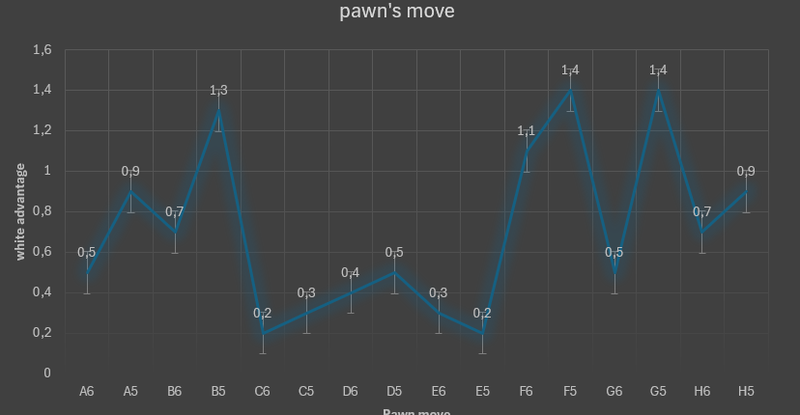
Among the many ways to respond to 1.e4, openings that begin with an immediate knight move hold a special place. Unlike classical pawn replies like ...e5, ...c5, or ...e6, knight moves such as ...Nf6 (Alekhine’s Defense) or ...Nc6 (Nimzowitsch Defense) do not always challenge the center directly. Instead, they often aim to control it indirectly, reflecting hypermodern ideas. Other knight moves, like ...Nh6 (Adams Defense) or even ...Na6 (Lemming Defense), stray even further from traditional principles—sometimes at the cost of soundness.
While not always stronger than central pawn moves, these knight-first replies can offer a psychological edge. They surprise, unsettle, and push opponents into unfamiliar territory early on. In this series, we explore these bold defenses—some respected, others dubious—but all rich in originality and creative potential.
The Nimzowitsch Defense : with an advantage of + 0,3 for the whites
The opening 1.e4 Nc6, known as the Nimzowitsch Defense, is an offbeat but intriguing reply to the king’s pawn. Named after the hypermodern pioneer Aron Nimzowitsch, this defense breaks classical rules in order to challenge the center indirectly. Rather than occupying it immediately, Black develops a piece and keeps options open.
With 1...Nc6, Black eyes the central squares—particularly d4 and e5—while remaining flexible. It may seem unusual not to contest the center with a pawn right away, but this move allows Black to adapt depending on how White continues. The knight might support ...e5 later or pressure d4 in certain lines.
After 2.d4, Black has several responses:
- The main line with 2...d5, immediately striking in the center.
- The counterattacking line 2...e5, transposing into Vienna Game or Scotch-like positions.
- Or even the provocative 2...Nf6, which can transpose into the Scandinavian with 2...Nf6 if White plays 3.e5.
While it’s not considered fully sound at the highest levels, the Nimzowitsch Defense has practical surprise value and a rich set of transpositional possibilities. It avoids early mainstream theory, making it attractive to creative players who want to take opponents out of booked lines from the very first move.
Still, this flexibility comes at a cost: 1...Nc6 allows White to establish a strong center early, and if Black doesn’t play actively, they can end up cramped or passive. Yet with accurate play, the Nimzowitsch can lead to unbalanced, dynamic positions, where both players must rely on understanding rather than memorization.
Though rarely seen at the top level, this defense has been tested by strong grandmasters including Richard Rapport, Baadur Jobava, and of course Nimzowitsch himself. It remains a viable weapon in rapid or blitz formats, and for players who like to confuse early expectations.
In summary, the Nimzowitsch Defense is a provocative and flexible response to 1.e4 that prioritizes adaptability over immediate center control. It’s not mainstream, but for the adventurous, it opens a path to creative and original play.
The Alekhine’s Defense : with an advantage of + 0,5 for the whites
The opening 1.e4 Nf6, known as Alekhine’s Defense, is a provocative and hypermodern response to the king’s pawn. Introduced into top-level play by World Champion Alexander Alekhine, this defense invites White to build a large center early—only for Black to try to undermine and destroy it later.
With 1...Nf6, Black immediately attacks the e4 pawn, daring White to advance it with 2.e5. This typically leads to the main line: 2.e5 Nd5 3.d4 d6, where White has a commanding space advantage, but Black prepares to chip away at it with moves like ...g6, ...Bg7, and ...Nb6. The result is often a dynamic, unbalanced position, where strategic understanding and timing are critical.
The Alekhine Defense stands out by rejecting traditional center occupation. Instead of meeting 1.e4 with symmetrical moves like ...e5 or ...c5, Black invites central expansion with the aim of provoking overextension. If White pushes too quickly or miscalculates, Black can strike back with central breaks and piece pressure.
There are several main branches:
- The Modern Variation (4.Nf3), aiming for solid development.
- The Four Pawns Attack (4.c4), where White grabs as much space as possible, leading to sharp tactical battles.
- The Exchange Variation (2.exd5), simplifying early and often leading to quiet positions.
Alekhine’s Defense is not as popular at the elite level today, as many top players prefer to avoid its space imbalance and potential long-term pressure. However, it remains a strong psychological weapon, especially in classical time controls where players must make early strategic decisions. It has been employed by champions like Fischer, Karpov, and Ivanchuk, and continues to surprise and frustrate opponents in all formats.
In summary, Alekhine’s Defense is an aggressive, hypermodern reply to 1.e4 that gives up space in exchange for counterattack opportunities. Ideal for players who enjoy maneuvering, dynamic imbalances, and making their opponents uncomfortable right out of the gate.
The Mirrored Amar Opening : with an advantage of + 0,9 for the whites
The opening 1.e4 Na3, often referred to as the Mirrored Amar Opening or humorously as the Lemming Defense (when mirrored by Black with 1...Na6), is one of the most eccentric and objectively weak first moves in chess. It defies virtually all classical opening principles: it doesn’t control the center, it doesn’t help development, and it places a knight on the edge of the board, where it's notoriously less effective—"a knight on the rim is dim."
With 1.Na3, White spends a tempo to place the knight on a square that exerts no real central influence and creates no immediate threats. It neither supports d4 nor applies pressure on f7, and it delays the natural development of the c-pawn and other queenside pieces. Essentially, it’s a form of provocation or psychological warfare, daring Black to overcommit or become complacent in the face of apparent nonsense.
There are no established “main lines” from this position, and most players simply treat it as a one-move handicap. A common approach for Black is to occupy the center classically with 1...d5 or 1...e5, gaining immediate central control while White lags in development.
Some players experiment with 2.c4 and 3.Nc2 to reroute the knight more effectively, but by then White has already lost time and ceded the initiative. Still, in casual or blitz games, this move can provoke premature aggression or overconfidence from opponents, making it a trick weapon for the creatively minded or for those trying to pull their adversary into unfamiliar territory.
Despite its flaws, the Mirrored Amar/Lemming Defense has its charm as a statement of style or humor. It serves as a good reminder that not all chess is played by the book—and that sometimes, breaking the rules (intentionally) can be part of the fun.
In summary, 1.e4 Na3 is not a sound opening, but rather an opening curiosity. It’s a playful deviation from theory with little practical justification, but maximum surprise value—ideal for those who enjoy turning chess into a psychological experiment.
The Adams Defense : with an advantage of + 0,9 for the whites
The opening 1.e4 Nh6, known as the Adams Defense, is one of the rarest and most unconventional responses to the king’s pawn. Named after Weaver Adams, an American master and author known for his eccentric opening ideas, this defense violates nearly every foundational principle of opening play.
With 1...Nh6, Black develops a knight—but to the rim, where it does little to influence the center or support future pawn breaks. It doesn't challenge e4 directly (unlike 1...Nf6 in Alekhine's Defense), and it weakens kingside coordination by placing the knight where it often has no useful follow-up. The saying “a knight on the rim is dim” fits perfectly here.
White can immediately seize control of the center with 2.d4, gaining space and development without pressure. The knight on h6 is frequently forced to waste more time maneuvering (e.g., ...f6, ...Nf7), or it simply remains passive. Occasionally, Black may try to fianchetto with ...g6 and ...Bg7, but the coordination remains awkward and slow.
Despite its drawbacks, the Adams Defense has been played at master level, including by its namesake and occasionally in blitz games by players like Hikaru Nakamura, more for experimentation or psychological edge than for objective strength. Its shock value and uniqueness can occasionally throw opponents off, especially those unfamiliar with early offbeat lines.
The line is not entirely without ideas—it aims to avoid theory and provoke overextension from an unprepared White—but the lack of central pressure, king safety, and logical development makes it highly dubious at serious levels of play.
In summary, the Adams Defense (1...Nh6) is an opening curiosity—creative, original, and very risky. It's rarely seen in competitive settings, but it remains a fascinating example of how even flawed ideas can lead to interesting, unconventional games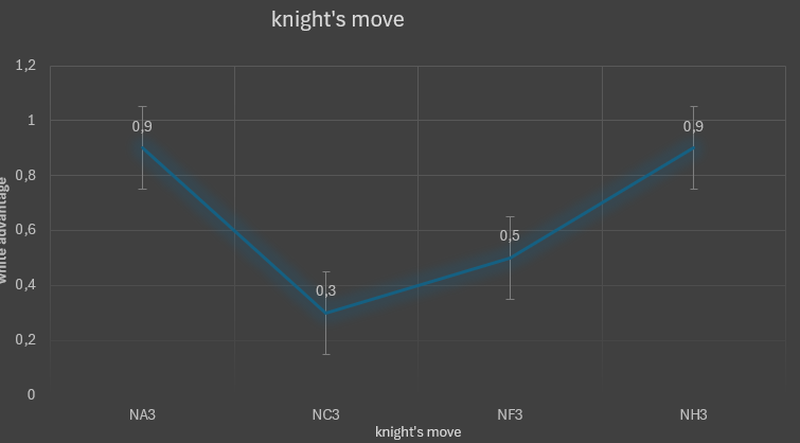
From rock-solid Caro-Kann and French, to the dynamic Sicilian, and even to the playful chaos of the Barnes, Fred, or Borg Defenses, the responses to 1.e4 form an immense and fascinating landscape. Each move reflects a different chess philosophy—some seek classical harmony, others hypermodern disruption, and a few simply aim to confuse or entertain.
What all these defenses share is the power to shape the character of the game from the very first move. Whether you value structure, initiative, surprise, or psychological pressure, there's a response to 1.e4 that matches your style. Some lines have stood the test of time at the highest levels; others are rarely seen, but still carry practical value in the right hands.
This journey through the many replies to 1.e4 shows that chess is far more than rote memorization—it's a creative battle of ideas, beginning the moment one player pushes a pawn two squares forward. And whether you follow theory or forge your own path, every move is a chance to write your own story on the board.