
5 Chess Books
[Non-Fiction]
For a long moment, a moment that seems timeless and eternal, we are not human and canine in a grassy area in a city park; we are only two players in a game.
Kingdom of Play by David Toomey
Arguably, more books have been written about chess than about all the other games combined. Without proper guidance, navigating this mare magnum could be a daunting task. Here's my selection of 5 non-fiction books; all of them, in one way or another, carry personal significance to me and - I dare suggest - definitely deserve your time, which I tried to convey in my rather short reviews.
- Bobby Fischer Goes to War
- The Immortal Game
- The Art of Learning
- A History of Chess
- Birth of the Chess Queen
Bobby Fischer Goes to War: How the Soviets Lost the Most Extraordinary Chess Match of All Time
by David Edmonds and John Eidinow
The story is centred around the famous 1972 World Chess Championship match between Bobby Fischer and Boris Spassky which took place in Reykjavík. The battle of America's lone ranger versus - as it seemed - the entire Soviet chess machine was naturally perceived at the time as part of the Cold War, and this particular battle meant to prove the intellectual predominance of one sociopolitical system over the other.
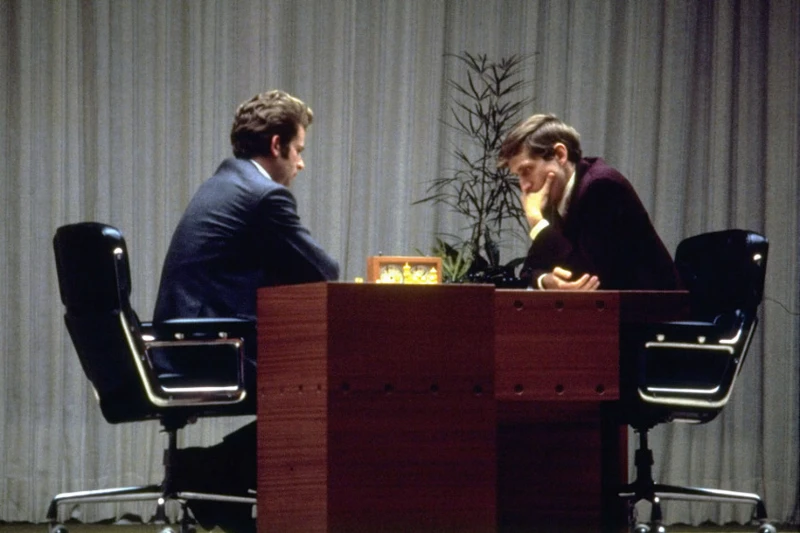
Behind the scenes of this glorious Match of the Century came to pass a multitude of petty squabbles and conspiracies: at some point the chairs were X-rayed in order to detect a secret mind-affecting device, both parties kept suspecting one another of foul play, such as using chemicals and even hypnosis (!)...
The event marked a pivotal point - the clash of these two superheroes resulted in an unprecedented popularity of chess and turned this ancient pastime into a profession for many, at least in the Western world.
But, surely and more importantly, what we have here is the saga of Bobby Fisher, arguably the most genius chess player who ever lived.
When you play Bobby, it is not a question of whether you win or lose. It is a question of whether you survive.
– Boris Spassky
The book also allows us to have a look at the dark side of Fisher's genius - his overarching xenophobia, lack of empathy and sense of humour, - and mentions bizarre facts like pulling wings off insects in Curaçao...
By the way, a new word was coined to describe Fischer's character:
In Rejkjavik to cover the match, the novelist Arthur Koestler famously coined the neologism "mimophant" to describe Fischer. "A mimophant is a hybrid species: a cross between a mimosa and an elephant. A member of this species is sensitive like a mimosa where his own feelings are concerned and thick-skinned like an elephant trampling over the feelings of others."
The Immortal Game: A History of Chess, or How 32 Carved Pieces on a Board Illuminated Our Understanding of War, Art, Science and the Human Brain
by David Shenk
“Understanding [is] the essential weapon” proclaims the ancient Persian poem Chatrang-namak (The book of chatrang), one of the oldest books mentioning the game. “Victory is obtained by the intellect.”
From myth and earliest records, through the Middle Ages into modernity (Norwegian wunderkind Magnus Carlsen is mentioned near the end), David Shenk traces the historical trajectory of chess, this 'cosmos unto itself', and touches upon many a subject, including human madness and artificial intelligence, medieval mores and modern art, the Muslim and European Renaissance, the Cold War, etc.
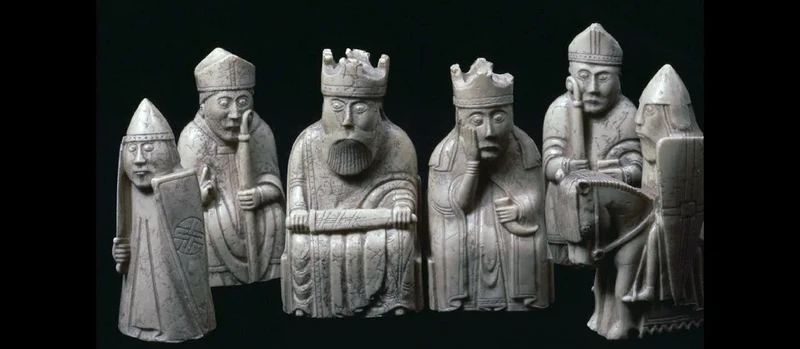
The story also has a personal perspective - for example, we learn of Shenk's great-great-grandfather, Samuel Rosenthal, and his watch, as well as the author's own experiences with the game.
And all through the book runs The Immortal Game, a gem of the Romantic Era, casually created on the board by Adolf Anderssen and Lionel Kieseritzky in 1851.
The Art of Learning: An Inner Journey to Optimal Performance
by Joshua Waitzkin
Many a year ago my adventures in the black-and-white jungle began with the computer program Chessmaster: Grandmaster Edition which featured a course narrated by Joshua Waitzkin. Yet it wasn't until much later that I learned the story of Josh - his first success, the early fame, the subsequent stress and strain... and then his sudden retirement from competitive chess to pursue another goal.
I first got involved with Tai Chi Chuan as a movement away from ego, away from fighting. I was drawn to the experience of harmony and interconnectedness that felt like a counterpoint to the dog-eat-dog chess world.
His childhood adventures in the Royal Game are loosely depicted in the famous film Searching for Bobby Fischer, which, to my mind, presents a healthy attitude towards chess and education in general.
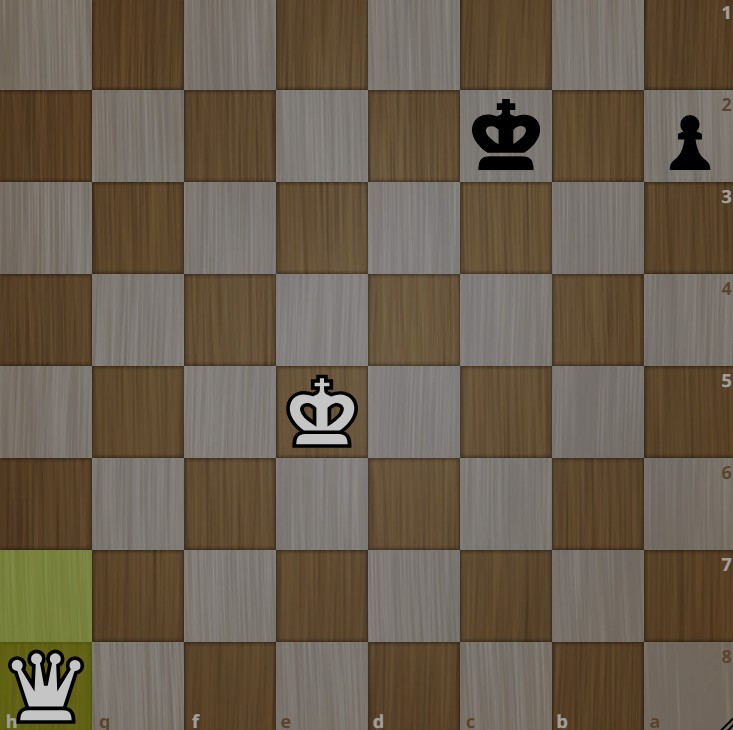
'Poe vs. Waitzkin'. This one comes from Searching For Bobby Fischer (1993) and features the famous double promotion + skewer.
Yet this book doesn't simply retrace his own path to mastery and - above all - to peace of mind, but also sums up his experience and delves into certain theoretical aspects of learning, like, for example, the entity and incremental theories of intelligence and in what way they can affect our everyday lives.
...I couldn't count on the world being silent, so my only option was to become at peace with the noise.
And even though at times this introspection via chess feels rather too philosophical and even mentions some fashionable nonsense like psychoanalysis, the book provides a unique perspective and tells a compelling story of a hugely talented person whose love of learning kept him on the right track through all the vicissitudes of fate.
A History of Chess: From Chaturanga to the Present Day
by Yuri Averbakh
Yuri Averbakh, 'the Renaissance Man of chess', a strong grandmaster in his own right, is widely considered one of the most prominent chess experts of all time.
A History of Chess begins with prehistory - in order to shed some light on the mysterious origins of chess Averbakh had travelled all over India and tried to glean whatever information he could from museums and temples.
The ancient Indian army consisted of four types of military forces, hence the name Chaturanga (quadripartite). When, in 325 BC, the soldiers of Alexander the Great crossed into India and came to the shores of Jhelum River, one of the tributaries of the Indus, they saw the whole army of King Porus (the king of Paurava): chariots, cavalry, war elephants, and infantry. That was chaturanga.
And here comes the most intriguing part - at the outset Averbakh presents a hypothesis of the game's origin, the one he considers to be closest to the truth.
Then the book follows the transition from chaturanga to shatranj and its consequent spread through the Arab Caliphate and later, via the Iberian Peninsula, into Europe. We learn of the oldest chess pieces in Europe, and how the church treated the game, and how eventually it assumed the modern form.
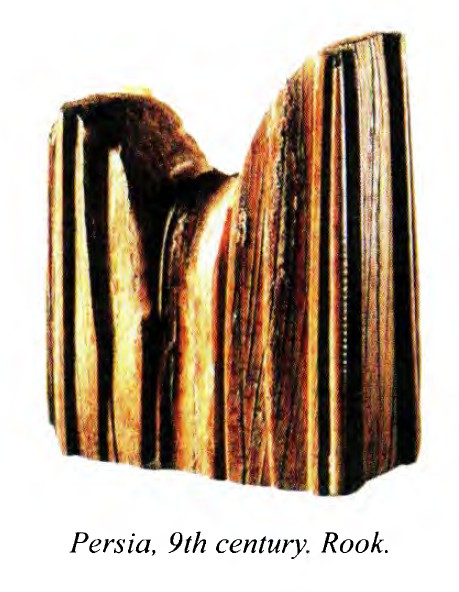
All things considered, I should warn that the book may feel rather dry and complex to a general reader, but certainly it's a must-read for those who wish to learn how chess evolved 'from a game of kings into the queen of games'.
Birth of the Chess Queen: A History
by Marilyn Yalom
For more than 500 years the chess queen has been domineering the board, yet initially the piece occupied a very humble position of the king's councilor. But how and why did the Eastern vizier undergo a gender change and - more significantly - managed to rse to such power? Who became the first inspiration? Was this rise coincidental or did it reflect the emergence of certain female sovereigns? These are the main mysteries Marilyn Yalom tries to uncover.
The interplay between symbolic queens on the chessboard and living queens at numerous royal courts provides the woof and warp of this book.
From Adelaide and Theophano, Eleanor of Aquitaine, Blanche of Castile, Catherine the Great and eventually to Isabella of Castile the author explores the historical and cultural circumstances (for example, the cult of the Virgin Mary and courtly love) which gave birth to the almost omnipotent chess piece known as 'the Queen'.
The book is divided into 5 parts - the first one delves into the mystery of the Queen's birth, then we travel to Spain, Italy, Germany, France, England, Scandinavia and Russia to observe the lives and influence of many a royal person as well as the overall spread of chess in Europe; finally, the fifth chapter briefly depicts the rule of Isabella of Castile who - most probably - inspired this unprecedented empowerment of the chess queen.
If you enjoy both chess and film, go check this weird game I've made - https://lichess.org/@/ElioTheDog/blog/guess-the-film-by-chess-position/mymIKBIh
Atomic Puzzles (part one and two) -
[Atomic] Puzzles for Beginners -


