
Social chess in the old-fashioned way, a couple of years ago; Source: page 41 of Tartakower’s Shakhmatnaya pravda (Leningrad, 1926), reproduced via Edward Winter’s Chess Notes.
Chessivity - a project to connect the chess community
A short background story
When I was growing up in the chess world, everything felt quite different from what it is like today. It was a world that young players nowadays can probably hardly imagine.
I remember visiting a chess café in my hometown every week, where I would spend hours blitzing and analyzing games with other amateur players. Back then, nobody cared much about computers or mobile phones. We would simply sit there, move pieces over the board and talk about chess.
As I grew older and became a stronger player, I noticed how the chess world slowly started shifting. I clearly noticed it in the period from 2015-2019. After finishing their games, players were less and less willing to sit down for a post-mortem analysis. More often, the discussion would be limited to a few lines while we were still sitting at the board.
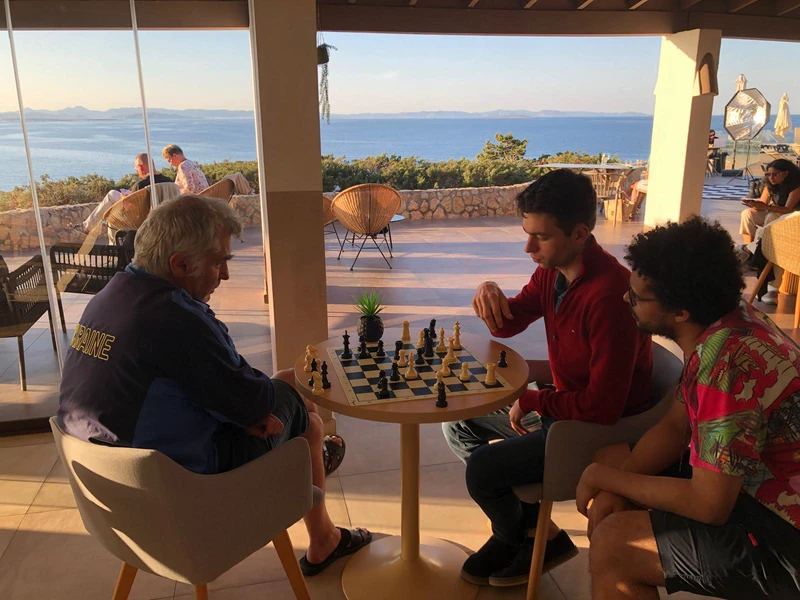
Together with Vasyl Ivanchuk and Thomas Bauer. Post-game analysis is something I have always enjoyed at tournaments.
At the same time, most chess activities moved online. Of course, a lot of this has been amazing. It is probably easier than ever before to play chess and improve at the game.
Still, looking back at it now, it feels like a pity that people do not exchange their knowledge and ideas in the same way anymore. I remember that, from an early age on, I would constantly ask other players how they worked on chess. How much they were training, what books they were reading, what openings they were looking at and what they were struggling with. You get the picture: there is a lot that chess players can share with each other. Today, much of this happens silently. Everybody sits in front of a screen, plays games, solves puzzles or watches videos, but very little of it is actually shared with others.
Realizing all of the above, I figured that it might be a good idea to try to change that. This is how the idea for Chessivity was born.
What is Chessivity?
The idea for Chessivity first entered my head a couple of months ago. As it so often happens in life, what followed was a string of coincidences. At some point, I happened to talk to a very good friend of mine, FM Johannes Steindl, who is a strong chess player himself. During the course of our conversation, it turned out that he had very similar thoughts.
We both figured: Wouldn't it be cool to have an online platform that, for a change, would not try to become yet another playing or training platform, but instead would solely focus on connecting the chess world? Various ideas quickly started pouring in. We had a long brainstorming session that day, and two more ideas came out of it.
Firstly, we wanted to address a general problem in the chess world: the difficulty of keeping track of where and when your friends are playing in tournaments. Often, our friends would play rather random tournaments or leagues, and it would be almost impossible to figure out how they were doing because there was no good place to follow the results.
The second idea was fixing something I have been missing throughout my entire chess career: a way to keep track of all the training and time I invest in chess. I am a rather data-driven person, and not having a good tool to maintain an overview of what I did in chess always bothered me. Typical chess activities include playing casual games online, solving puzzles over the board, reading a book or playing an OTB blitz tournament. As you can imagine, it is rather difficult to keep track of all of that.
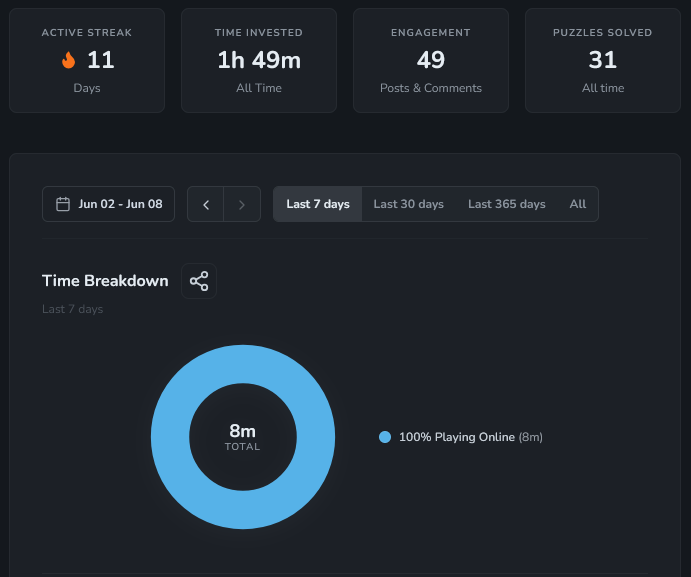
A screenshot of my training & playing statistics on Chessivity. As you can see, I was not as active as I should have been! The nice part about keeping track of your activities on Chessivity is that is up to you what exactly you share and what not. You can share & compare your training to others, but if you prefer to track your training for yourself while keeping it invisble for your followers, that is possible as well.
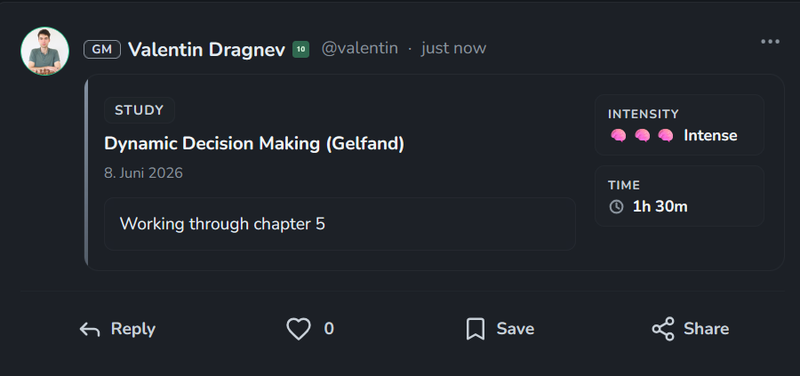
A typical training log that will be added to your statistics automatically.
Development & Team behind Chessivity
A lot has happened since we started building the platform. Rather soon, Johannes and I figured that we would need further help, as we were ambitious and wanted to implement more features than we could handle ourselves at that point. This is when Johannes introduced me to Paul Höller, a brilliant software developer.
Once the three of us sat down together, it quickly became clear that we would tackle the project together. Both Johannes and Paul have additional backgrounds, with Johannes being a mathematician and Paul an electrical engineer. Both are extremely gifted people and hard workers.
Curiously, another interesting development started happening around the time when we started building Chessivity. In recent months, whenever I routinely browsed through various chess sites, it seemed as though I would see a new chess platform being advertised almost every day.
On the one hand, I think it is great that chess is becoming more and more popular and that people are trying to build new things around the game. On the other hand, some of these platforms left me with a strange feeling. Sometimes, it seems as though chess is treated primarily as an attractive market: attach a famous name to a polished product, put enough money behind it and hope that the chess world will follow.
There is nothing wrong with trying to build a successful business around chess, and we are trying to do that ourselves. Still, I believe that the starting point matters. If you want to offer something to chess players, you should understand what chess players typically experience, how they work on chess and what they actually like and need. With some of the current platforms, I did not really have that impression. With Chessivity, we want to build something that comes from within the chess world.
Is Chessivity For You?
One thing that we particularly cared about when building Chessivity was that it should benefit anyone interested in chess. From complete beginners to experienced chess professionals, our aim has been to build something that anybody can enjoy using.
For that reason, Chessivity is free to use. We have already spent, and will continue to spend, countless hours developing Chessivity, as well as a lot of money on it - regulations and bureaucracy in Austria would not allow otherwise. Still, it is important to us that nobody feels left out and that the entire chess world can participate.
Of course, we will need to operate as a business at some point in order to cover our expenses and keep improving the platform. We have some ideas for future premium features and other possibilities. However, our intention is that the core functions of Chessivity will remain free to use.
Try Chessivity and tell us what you think
If you would like to give it a try, visit www.chessivity.com.
The platform is still in its very early stages, and we are aware that there is room for improvement. Even though we are a small team, it is very important to us to listen to your feedback. We make a serious effort to evaluate your messages and suggested improvements. If you would like to reach out about anything, feel free to contact us via the email addresses or via the feedback section listed on the website.
One last thing we would like to emphasize is that we in no way intend to compete with any chess-playing platform, especially not Lichess. In fact, we believe that Lichess is one of the greatest websites the chess world has ever been blessed with, and its mission has a lot in common with ours. That is also why users can log in to Chessivity with their Lichess accounts and sync their Lichess statistics, such as playing time and puzzle-solving time, with Chessivity.
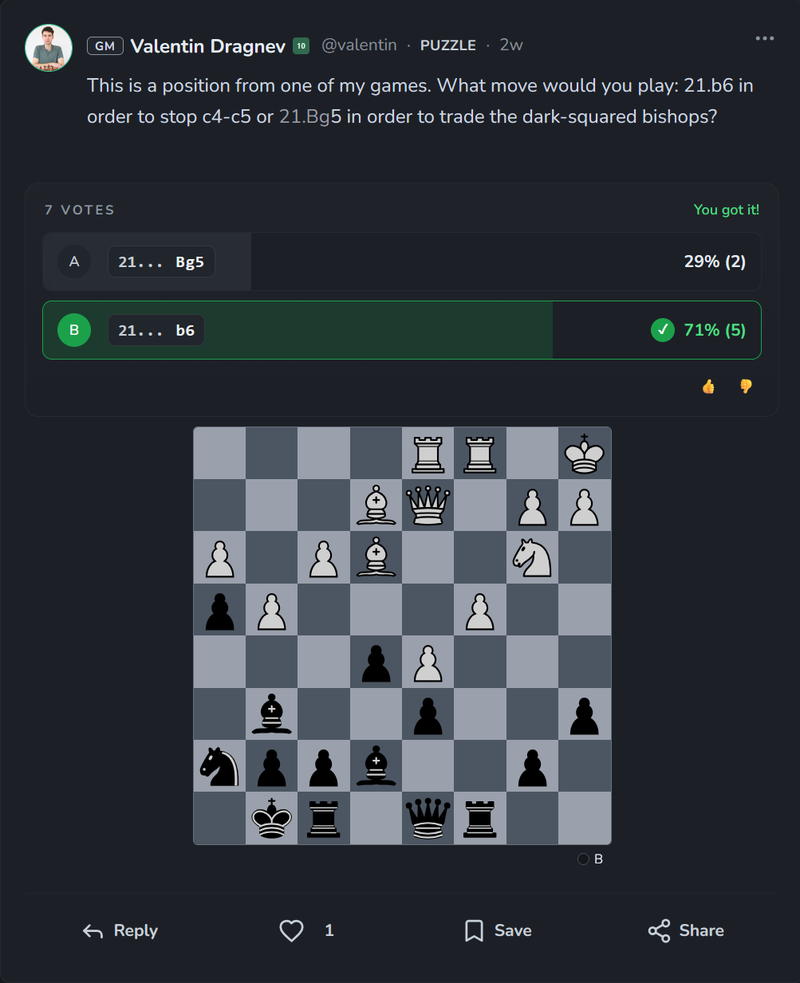
A screenshot of one of my posts on chessivity.com. You can post puzzles, polls, share general thoughs and much more.
If you like the idea and know somebody who might enjoy Chessivity, we would also greatly appreciate it if you shared it with them.
I will surely post another blog about Chessivity and its various features in the coming weeks. I will also keep posting my usual chess blogs.
That being said, we hope that all of you will enjoy and benefit from Chessivity.
Have fun!
You may also like
 GM DrAgnevstein
Fantastic Positional Queen Sacrifices - Part 2
Continuing the exploration of positional queen sacrifices. GM DrAgnevstein
What I learned playing against world-class players
Over the years I had the chance to play many games against world-class players and even multiple wor… GM Avetik_ChessMood
10 Things to Give Up to Enjoy Chess Fully
Discover how embracing a lighter mindset can help you enjoy chess again and achieve better results. CM HGabor
How titled players lie to you
This post is a word of warning for the average club player. As the chess world is becoming increasin… GM DrAgnevstein
Shocking King Moves
Considering unusual king moves in the middlegame is almost impossible for most players. Our minds ar… thibault