
Offensive Defense
How to advance while retreating
In Soviet military doctrine, “elastic defense” meant you didn’t win by clinging to a long, fragile line. You held depth instead of width. You allowed the opponent to advance, stretch themselves thin, and burn their energy before they ever reached the heart of your position.
Listen, I’m not at all supporting Soviet policies or warfare models. This isn’t even the correct forum to discuss such things. However, although I am only an enthusiastic chess hobbyist (look for your master annotations elsewhere), I believe this concept of “elastic defense” does have its place on the chessboard. Although I think the term "offensive defense" has a better ring to it. To see an example of offensive defense in action, let’s look at the position below:
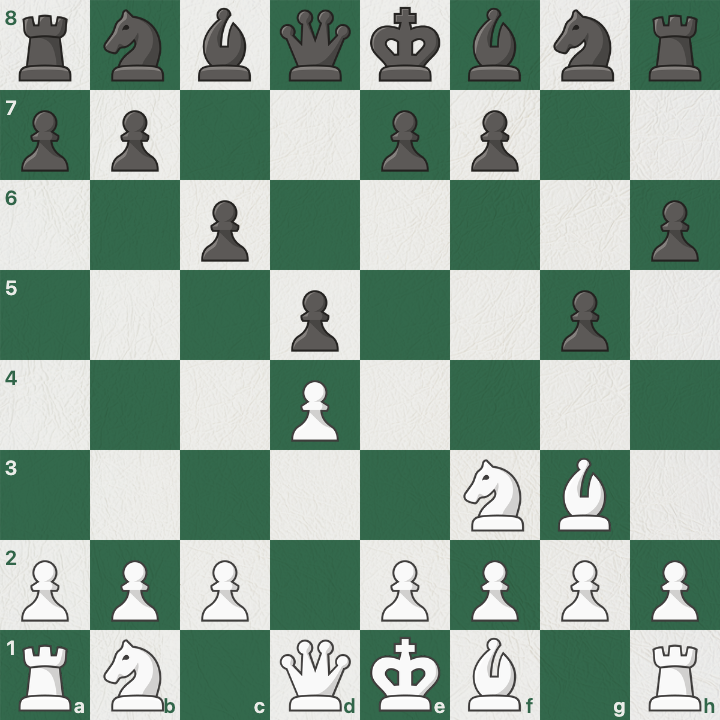
Now I’ve been trying to play the Torre Attack with white with mixed success. The Chessable course I’ve been doing tells me to get an early Bg5, often leading to black weakening its kingside pawn structure. This game is a good example of that. 2.h6 leads to 4.g5. Yes, my bishop and knight appear a little cramped but look at black’s pawn structure. It’s going to be hard for my opponent to kingside castle because he has weakened the light squares on his kingside chasing my bishop. Just like the Soviets, I have enticed black to accept the bait into my territory, where I hope to leave him overextended and uncoordinated. The next move is: 5.f5? Surely this can’t be right. Now e5 looks like a great future outpost and behind his wall of pawns, his kingside is blowing in the wind, not to mention he’s not developing his pieces. I have made him advance his thin daisy chain of pawns in my camp, a chain of pawns without developed pieces behind it, extended with his king still in the middle. If I can get developed before he has time to get coordinated, he’s cooked.
And here is a crucial move, 6.h3, the move that inspired me to write this post.
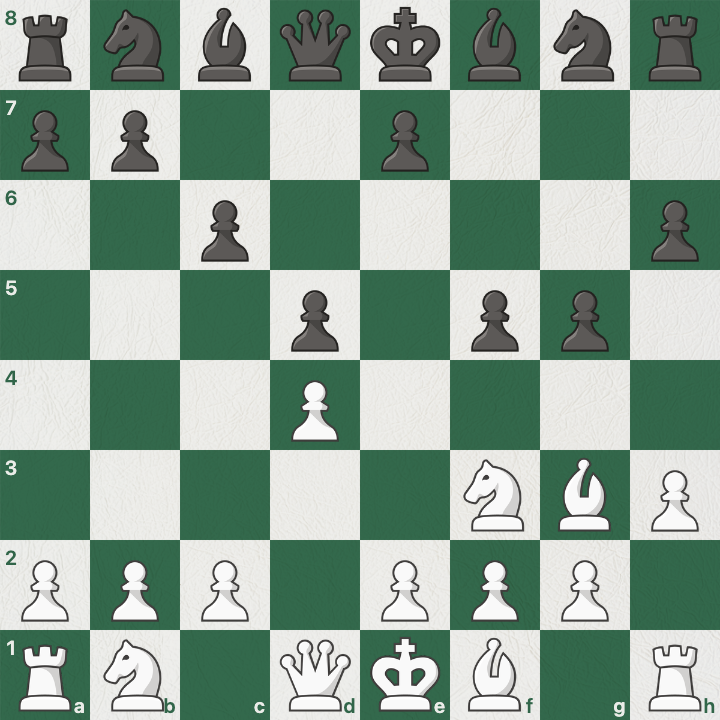
h3 is a common move in the Torre, often before Nh5 forces the exchange of the dark-squared bishop. I did it without thought, taking a total of 3 seconds. Bishop attacked = h3 = hide bishop on h2. While 6. h3 is not the worst blunder I’ve made (not even in this game -- that would be when I hung my bishop with 22.Kh2??), what would be a better move?
Let’s move back to my Soviet military analogy for a moment (give me a break – I have to get some use out of that master’s in Russian Studies I have). Early Soviet military leaders insisted that defense must be active — combining defense with counterattack. A prevailing ethos in the early years of the USSR was that any defensive maneuver must always be combined with offense. But what am I getting at? What's the relevance here? Well, ask yourself: what would be a better move than h3?
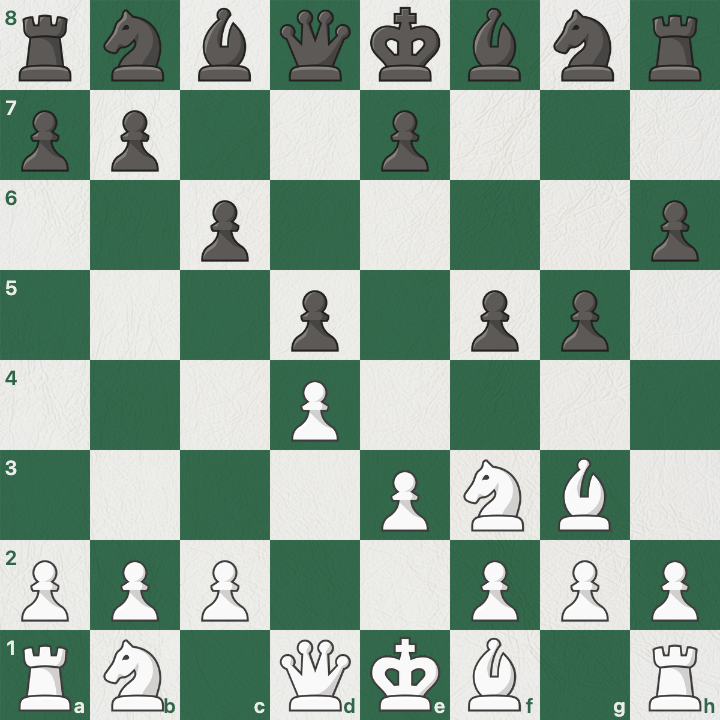
6.e3! Look, I don’t need to be titled to be able to throw an exclam on a move. If you have a problem with it, take it up with my manager.
Now what does e3 do?
1. It strengthens the center.
2. It creates a pawn chain.
3. It opens a diagonal for the light-squared bishop.
And if Black pushes f4, we get exf4, gxf4, Bxf4 — and suddenly his proud pawn chain becomes a shattered liability.
That is offensive defense.
h3 was retreat.
e3 was retreat and preparation for counterattack.
Like the intermediate chess player I am, I just retreated. Instead of e3, I played h3. And after 6.f4 and 7.Bh2, my bishop is entombed, black has a h6-f4 pawn chain, and I am getting suffocated on the kingside. Eventually, this leads to some serious complications, me blundering a knight, and shame on my family name. The fact that I somehow won the game is the only thing that kept me from getting disowned. But this could have all been avoided with e3, with offensive defense. So next time your opponent threatens to capture a piece or checks your king, remember: BE OFFENSIVE WITH YOUR DEFENSE!
You may also like
 WFM fla2021
Endgame Tips That Might Change Your Life...Or Not!
In this post you will find some important tips to improve your endgames without having to study that… IM NikolaN98
Top 5 Mistakes You Should Avoid in Your Games
Improvement in chess doesn’t always come from learning more openings or memorizing longer lines, it … RuyLopez1000
One of The Greatest Games Ever Played
Yuri S. Gusev vs E. Auerbach 1946 CM HGabor
How titled players lie to you
This post is a word of warning for the average club player. As the chess world is becoming increasin… FM MattyDPerrine